The techies among us will know how much we tend to obsess over fancy gadgets. We all want the best camera the industry can stick in a smartphone, and can spend small fortunes acquiring them. Is that absolutely necessary, though?
We have heard it time and again: a good photographer can take an amazing shot with any camera. How true is this? As with anything else we talk about around here, the answer is not as straightforward as we would wish. Today we are here to dig deeper into this topic and find out what a “professional” can do with a basic smartphone camera.
We have heard it time and again: a good photographer can take an amazing shot with any camera.
The photographer
Let’s start with a bit of an introduction, because I am not exactly famous. I am Head of Imaging and Photography here at Android Authority and have been working in tech media for about nine years. I mostly focus on photojournalism and product photography, which means I have done shoots at conferences, conventions, and varied tech events. Studio and lifestyle photography are also common assignments I take on.
Technique vs technology
While more refined tech won't make your photography amazing, it can take your already great pictures to a higher plane.
What makes a good image? I believe the most important factor is the ability to evoke some sort of emotion, showcase the subject nicely, or tell a story. Furthermore, composition, lighting, and style are some of the things photographers will mostly keep in mind when setting up a frame.
Notice I didn’t mention sensor sizes, fancy lenses, and expensive accessories. That’s the kind of stuff we photo enthusiasts usually consider secondary, but I do stand by the idea they are also important to take into account. Here’s the way I see it: While more refined tech and tools won’t automatically make your photography amazing, it can take your already great pictures to a higher plane.
My favorite photographer is Joey Lawrence. Though he is an acclaimed photo prodigy with massive amounts of money for equipment (which he does have), he often reminds us that all this stuff is secondary. In an interview with PhotoWhoa, for example, he is asked what he would do with a $100 budget. He answers the following:
For me, it all starts with great lighting. Although I use lots of fancy equipment on shoots, the good thing is you don’t need much to create good lighting. I’d find a piece of cardboard in a dumpster, spend $2.00 on a roll of tin foil and create a silver reflector. Then I’d take my subject to a pre-existing photogenic location, such as a rooftop or interesting wall that matches the subject’s vibe. At sunset, I’d reflect some light on to them, or use the reflector minimally to create a catchlight in their eyes. Then I’d use the remaining $98 on a nice dinner for my crew and I!
To summarize, the ideal scenario is one in which you apply the intangible fundamentals of photography, while also making the absolute best of the environment and tech you have. If that tech is a basic smartphone camera, you can still push it to its limits to create beautiful imagery.
The phone and test details
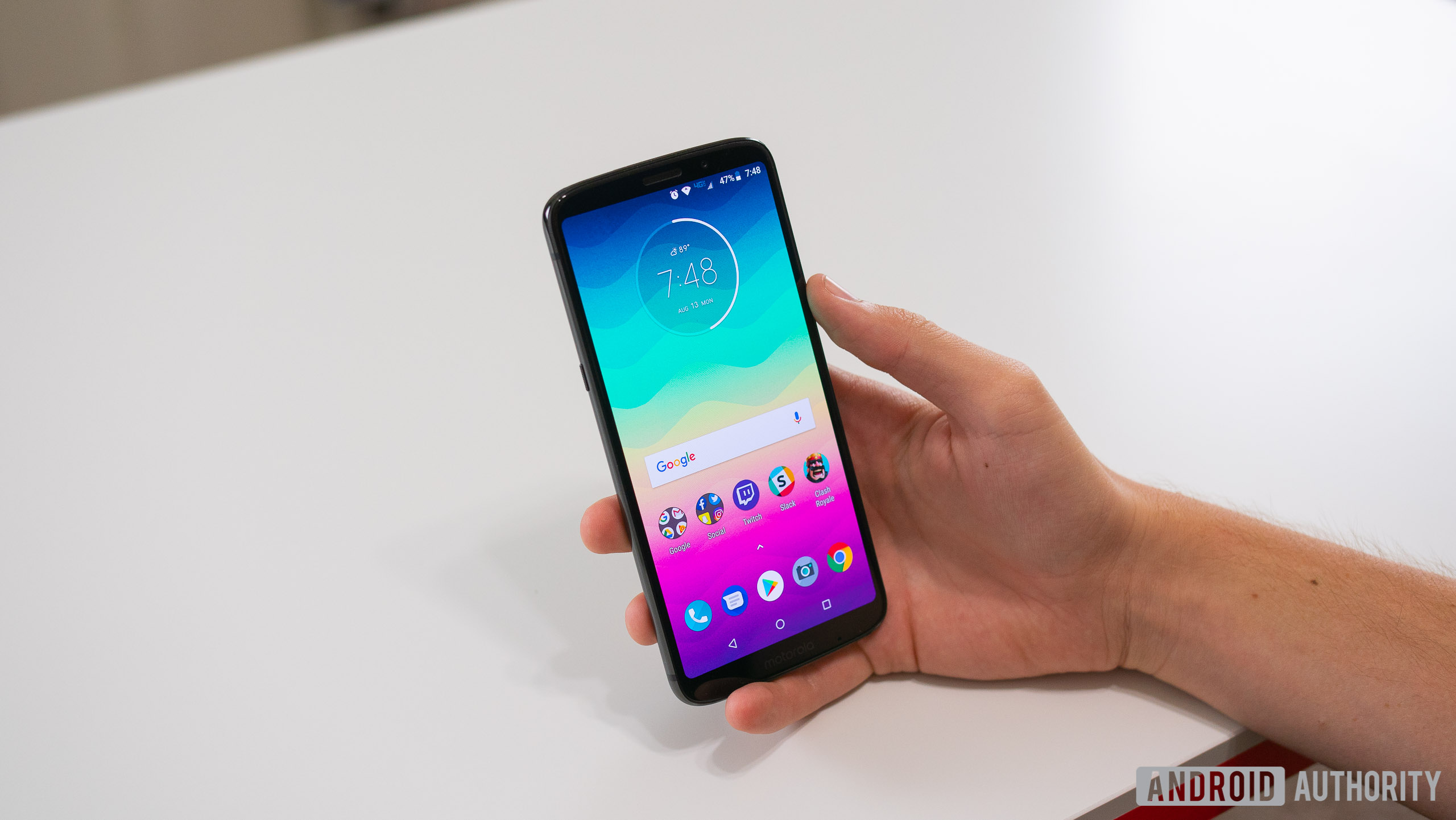
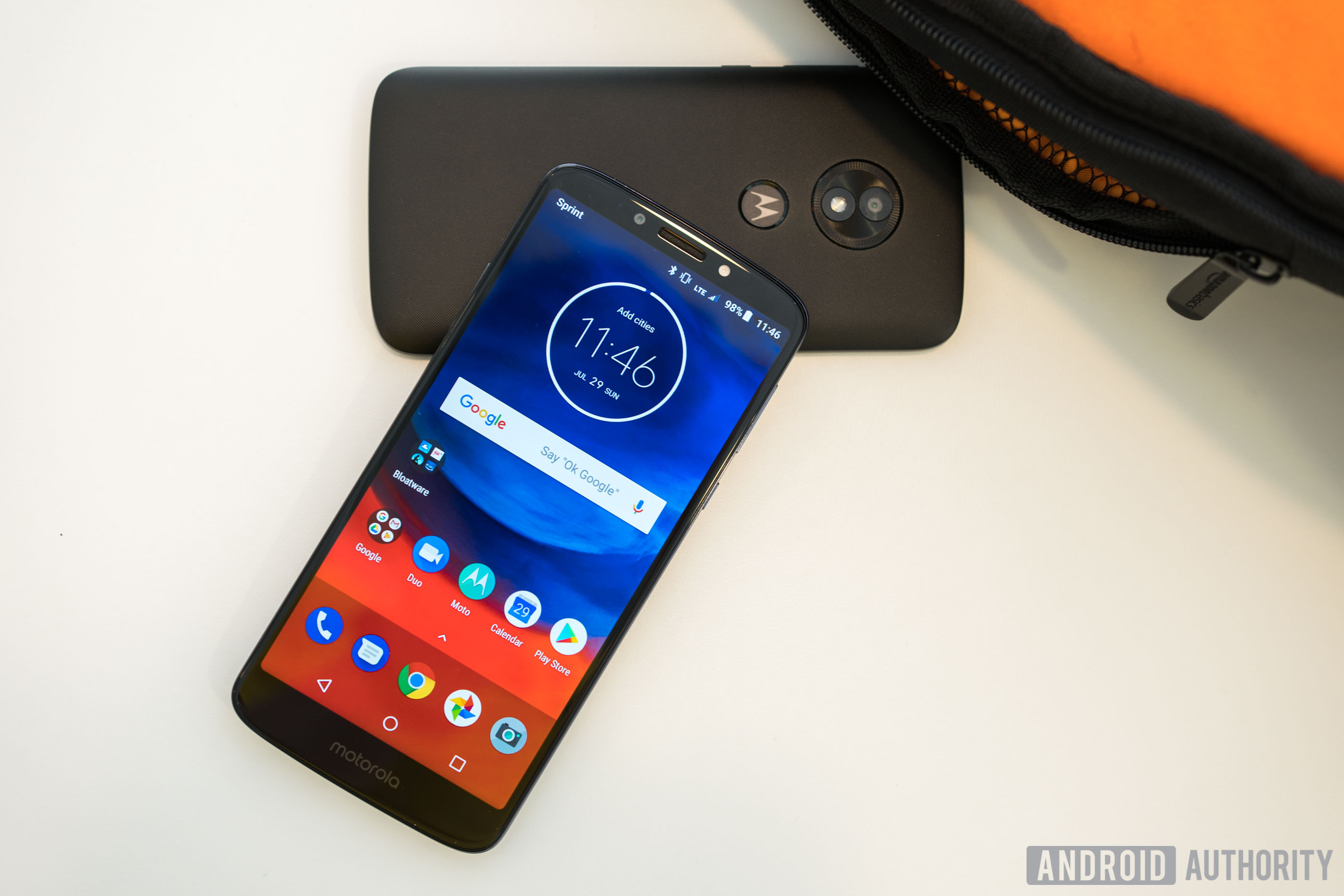
We are taking things to another level here, as we aren’t using your top-of-the-line handsets with the best tech in the industry. In this test we will be using a Moto E5 Plus, which has varied prices depending on where you get it from, but it can be had unlocked from Amazon for about $200. Look around and you can also find it for as low as $129 (or less) from carriers like Boost Mobile, Virgin Mobile, and Metro PCS.

The Moto E5 Plus has a 12MP camera with an f/2.0 aperture and a 1.25um pixel size. The camera is aided by an LED flash, phase detection autofocus, and laser autofocus. One factor to bring up is that it does not output photos in RAW (uncompressed image files), so we will be working with JPEGs instead. This is a limiting factor and you could get better results with RAW files, but again, we are working with what we have.
The smartphone does offer manual mode, which I will be using almost exclusively. I want to have full control over as many settings as possible.
I will not be comparing this phone to other high-end devices this time around, but that is definitely an interesting topic to possibly cover later on. Do let us know in the comments if you would like a professional photographer’s take on comparing a state-of-the-art camera phone to an affordable one.
Best Motorola phones (December 2019)
Moto E5 Play and Moto E5 Plus review: All good things come to an end
Back to the subject matter. I will not simply be taking well-composed photos for this experiment, as I want to give the phone a good chance at actually competing with world-class cameras. I will take these shots using multiple techniques (some of them only used by pros and enthusiasts). I will then take these images and give them a full edit with PC software used by serious photographers.
15 best Photo Editor Apps for Android for 2019!
There are three types of photo editors on Android. There are some that try to rival desktop photo editors in power like Adobe Lightroom CC. The second type is a lighter editor like Snapseed that …
In this case I will be sticking to Adobe Lightroom CC, because it is an app available on mobile devices and has all the features its PC counterpart enjoys. It does require a subscription, but if you want a good free option I recommend Snapseed, which is nearly, if not just as good.
Product photography test
For the first test, I will replicate a couple Android Q images I recently made for Android Authority. These will be shot in my studio, in a controlled environment, under the exact same circumstances. We will also compare these with the original shots, which were taken with a full-frame Nikon D610 DSLR camera.


Truth is, even for a pro it would be hard to tell these shots were taken on a phone if they weren’t sitting next to a nearly identical DSLR shot. There are plenty of differences a keen eye will see in the details, though.
Shooting RAW on a full frame DSLR gives you much more data right off the bat. Take the first image as an example. There is more detail on the table’s surface, as well as the phone. Not to mention color accuracy is a bit more on-spot. Dynamic range is far superior, as the photo displays many more color variances and shades.
Best triple camera phones: What are your options?
The best Android camera phones you can get
Yes, the Moto E5 Plus shot does look more white, but color accuracy is inferior. The green logo is too dark and saturated, as is the orange button and the phone’s body color. This is because the phone’s software will play with the contrast and saturation (among many other things) before it gives you a compressed JPEG. This leaves you less room to play with in post-processing.
Another obvious difference is in depth of field. Of course my huge $800, 105mm, f/2.8, macro lens will create a smoother bokeh (blurry background). The phone picture actually has no natural blur at all; I had to recreate it while editing and it doesn’t look half as good.
But as I mentioned above, I am being critical and really looking into the image. It would be hard to tell either of the Moto E5 Plus photos were taken with a smartphone if there was nothing to compare them to.
Portrait photography
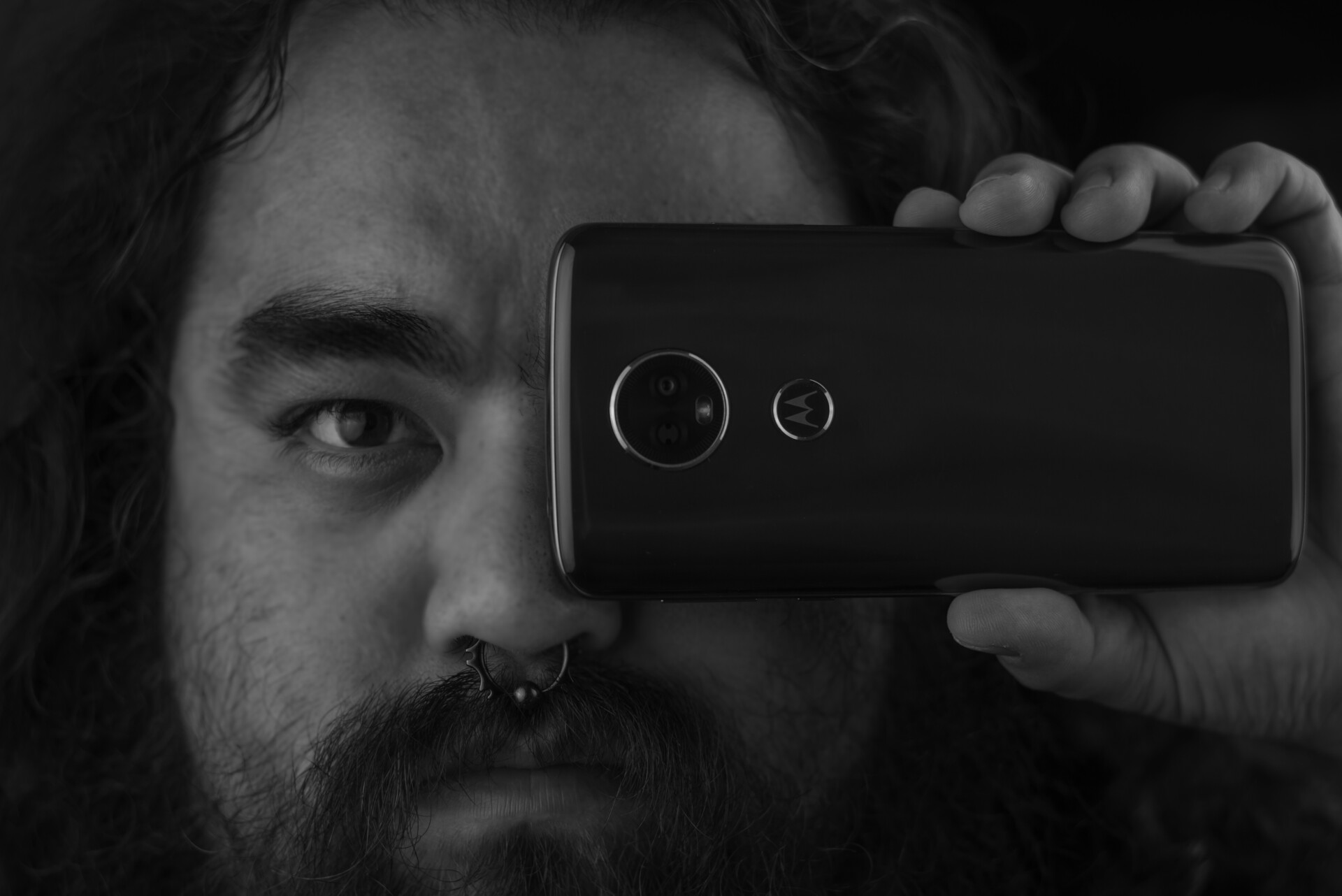
My wife is looking for a new job and needs a headshot, so I thought adding this photo to the experiment would be a good chance to see what the Moto E5 Plus can do in terms of portrait photography.

Not too shabby, right? There are a few things I can definitely complain about. The software did sharpen the photo a bit too much, which is common in most smartphones. Dynamic range is lacking, as the shadows caused by the hair are significantly stronger than when taken with a more sophisticated camera. There was also some artifacts that were hard to clear. Regardless, I say this is still perfectly good LinkedIn material!
Photojournalism
It’s time to get out of the studio! I am sure you have heard of the huge migrant caravan that made its way from Central America all the way to Northern Mexico. Many of these people currently hang around shelters and the US/Mexico border, which extends all the way into the ocean, as we can see in this image.
It’s a very interesting situation to capture, and a very hot topic. I wanted to bring the Moto E5 Plus with me and this image is the result of one of my trips to Tijuana.

Phone HDR vs true HDR
Let’s run a little experiment. Most modern smartphone cameras have High Dynamic Range (HDR). While manufacturers swear by their implementation of this complex technique, it still gets nowhere close to what you can do if you learn the technique and apply it manually.
Whether phones do true HDR or not, results are never up to par.
Essentially, HDR accomplishes a balanced exposure throughout the frame. This is done by shooting multiple images at different shutter speeds. The idea is that each photo will expose for different light levels. This image conglomerate is then merged, becoming a single photo with much more information in both the bright and dark sections.
Whether phones actually follow this process or not, the truth is results are rarely up to par. For this section, I have decided to compare the Moto E5 Plus’ built-in HDR feature against some “real” HDR photos. I took multiple shots with the Moto E5 Plus, merged them in Lightroom, and edited the results. Let’s compare!


Manually assembled HDR photos are more evenly exposed, contain much more detail, and look significantly less artificial. The difference is astounding. If you are serious about HDR results, take your time to learn how to actually do manually. As you can see above, any camera will do it well, even a smartphone one.
The difference between built-in HDR and manual HDR is astounding.
Food photography
All this shooting made me work up an appetite, so why not give the Moto E5 Plus a chance to flex its food photography muscles?

Shooting food is a popular trend, but the internet is full of ugly grub images. Give your photos a little more love! For this photo I used a small LED panel to direct light straight at the cake, effectively giving it attention by exposing it over its surroundings. Not everyone carries one of these around, but a phone’s LED flashlight is essentially a less powerful version of it.
There is a good level of detail in the bread and whipped cream texture. I do wish there was more data to work with in the top layer of the cake, which had chocolate and Oreo pieces. This is where you can see how inferior a smartphone camera’s dynamic range can be. I could have edited the area to make the details stand out, but when I tried it I found out it ruined the quality. Decided it was better to keep noise in check and leave the Oreo pieces a little more on the dark side.
Still a nice photo to share on Instagram, right?
Hand-held Photos
“But Edgar, we can’t be carrying around huge lights and tripods!” That is totally true, which is why I created a section with nothing but hand-held, photo walk style shots. Let’s take a look.

Texture is very important in Photography. I may like my studio set, clean backgrounds, and perfect lighting, but nothing adds character to an image quite like a good texture can.

This is also a photo of the USA/Mexico border, in Tijuana. The image portrays a door between both worlds; one that almost never opens. In rare occasions US Customs will allow separated family members to see and feel their loved ones by opening this monitored gate.

Here is some art by the same border. It shows both countries’ iconic birds together.

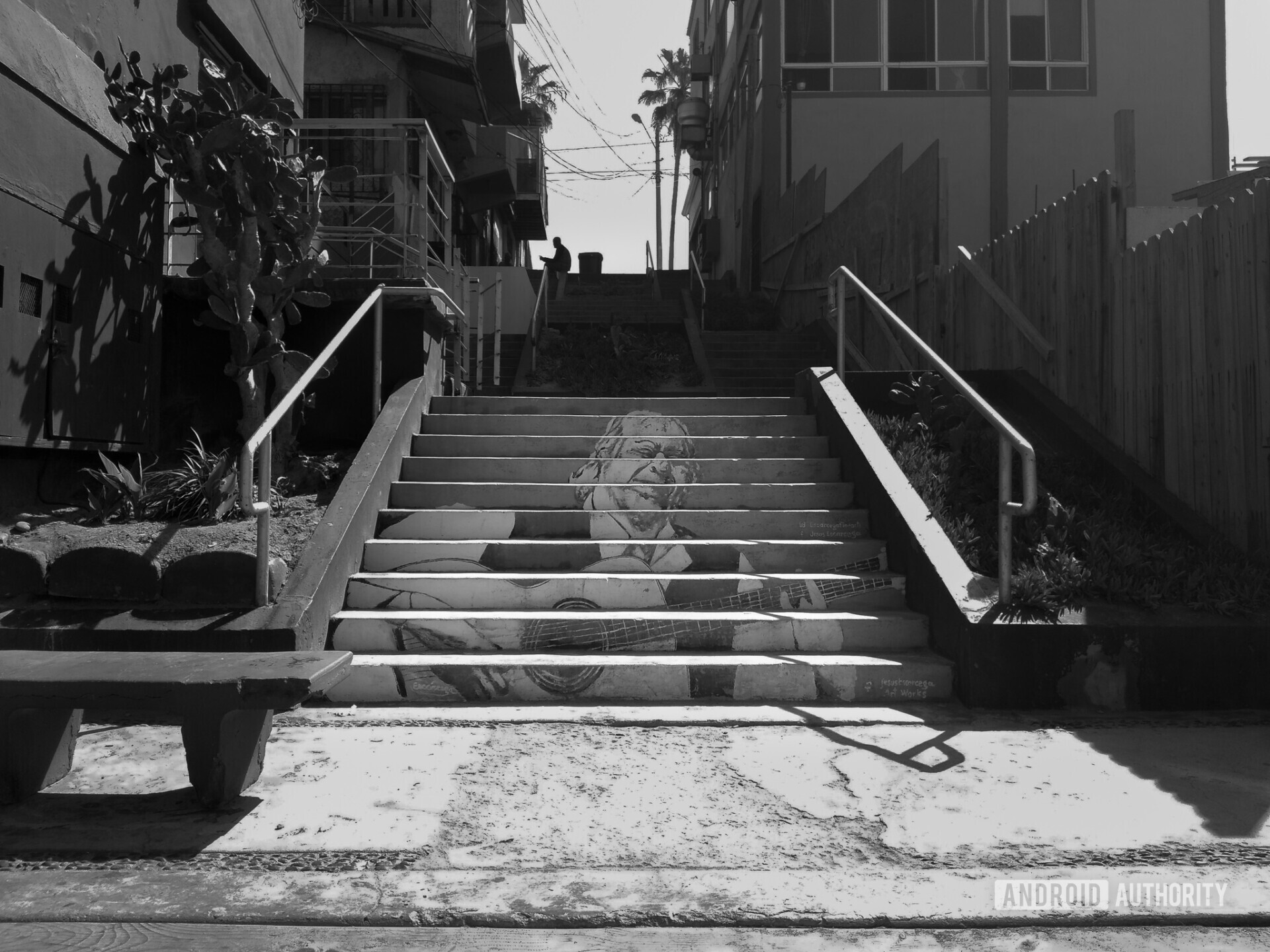
This step painting of Paco de Lucia (popular Spanish guitarist) inspires the community. I liked the ambiance and silhouette at the end of the steps. It’s just a nice shot.

Just a cool shot of a street vendor!

Stones at the beach in a very organized order. Just thought they were interesting. Now, for this one I really do wish I had my tripod with me. A long exposure of the waves would have taken this image to the next level.
The verdict

I would argue these results are probably better than what I used to get from my first SLR systems. They were all shot with a $200 Moto E5 Plus, which goes to show you how far smartphone cameras have come.
To put it bluntly: your phone's camera quality is probably not the cause of your ugly photos.
The Moto E5 Plus did get a lot of help from me. These shots took much more work than simply pointing a smartphone at something and pressing a button, but you don’t have to do the same. This is simply a demonstration that giving photos some love will go a long way. To put it bluntly: your camera is probably not the cause of your ugly photos.
What can we take from all this? Yes, mobile cameras are made differently and some are definitely better. The phones carrying said superior technology also tend to cost much more. Just check out the images above and tell me if you still think you need that thousand-dollar phone. I know I would rather save myself a few hundred dollars.
from Android Authority https://ift.tt/2HWyam2