Tuesday, 17 March 2020

The best drones you can buy in 2020

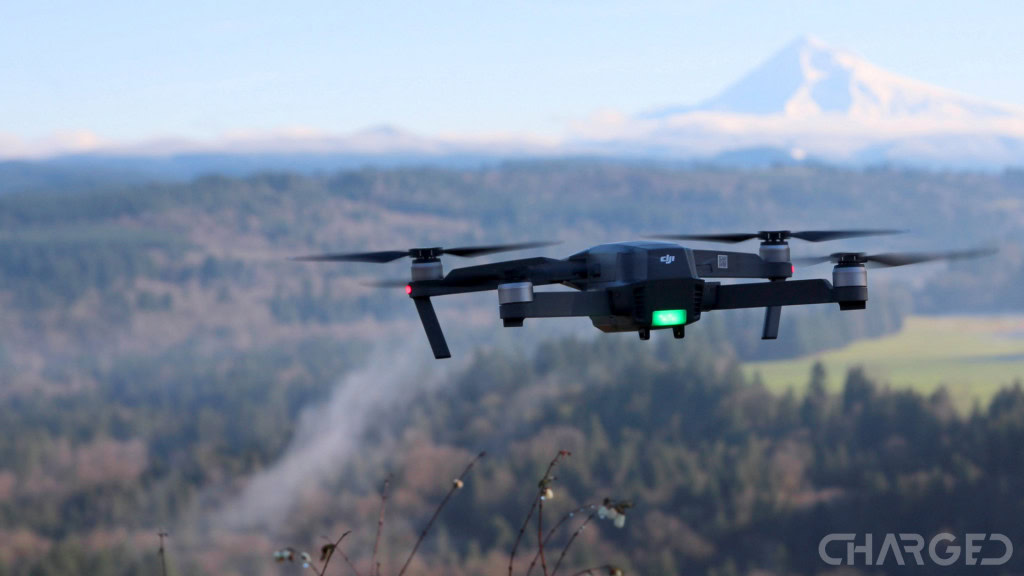
One of the best drones is the DJI Mavic 2 Pro, flying on a sunny day with blue skies

This is a shorter version of our complete Best Drones list on Drone Rush.

It used to be that if you wanted a drone, you either chose the DJI Mavic Pro for its compact design or the iconic Phantom line of drones for their camera capabilities, but many more options exist today. We explore the ins and outs of many drones over on Drone Rush, but let’s just focus on the best of the best for you today.

I beg you to learn the drone laws and register with the FAA before you fly, it’s the law, after all. Once you are ready to take to the sky, let’s take a moment to get you the right drone. You may be wanting a toy for in the house, a racer to take to the track or a superb camera drone to capture photos and video from the sky. There’s a drone or two for all of those tasks. 

Warning: Drone pilot certification for all pilots is coming soon, as is remote ID for all aircraft. Safety is the name of the game, but there will be additional steps you need to take before you fly in the coming months.

Best drones on the market today:

Editor’s note: We will regularly update this list with new and exciting drones as they launch.


People buy and fly drones for a number of reasons, so we’re going to look at the best machines in a number of categories. If these drones do not quite fit your needs, we’ve evaluated hundreds of others on Drone Rush. Starting with the least expensive and moving up, here are the best drones:

9. Hubsan H111

Best Nano drone for flying indoors – $18

Hubsan H111 nano drone with Android figure

There’s no single category for small drones, but we generally consider any machine that can fit in the palm of your hand a nano drone. One of our absolute favorites is the Hubsan H111. We respect Hubsan as a brand, we have many of their larger drones in various other categories on the site, but the H111 is one of the easiest machines to get your hands on, and safest to fly indoors.

Make no mistake, this is a toy drone. It has limited battery life and minimal flight capabilities compared to more advanced machines, but it lives on my desk and flies frequently. It’s challenging enough to hone my piloting skills and super fun. It’s also priced right to be a great holiday gift.

Check out the Hubsan H111 on Amazon.


8. Syma X5C-1

Best toy drone, a resilient trainer – $42

Syma X5C toy drone, one of the best drones for beginners

We firmly believe every aspiring drone pilot should start with a drone like the Syma X5C. This toy-class drone has limited functionality, but it is true to the piloting experience of more expensive drones. Flying this machine will help you master the basics of flight, understanding which way is forward and managing to hit the video record button at the right time in that flight. Crashing is almost inevitable, but would you rather learn how to handle crashes on a machine worth hundreds or even thousands of dollars, or a resilient and fun Syma X5C?

Check out the Syma X5C on Amazon.


7. UVify OOri

Best racing drone trainer, the need for speed on a leash – $295

UVify OOri lights on a reflective surface

This one’s for those who prefer high-speed fun to silky smooth photo and video capture from the sky. The UVify OOri impressed us with its resilience and flight capabilities when we tried it at CES 2018. This small drone can safely fly inside your home with the prop guards installed. It’s stable and has enough flight assist features for most people to master it circling the couch. Machines like the Hubsan H111 and Syma X5C top out at less than 10mph — not the case with OOri. Give the UVify OOri some room to move and it’ll clock up to 60mph.

There are many trade-offs when you look at a racing drone. These machines are built for speed, extreme maneuverability and short distance operations for a race that lasts a little more than five minutes. A fun alternative to this drone is the Fat Shark 101 race trainer.

Check out the UVify OOri.


6. Walkera F210

Best ready-to-fly racing drone, no leash – $319

Walkera F210 Pro at CES 2017 dr

Racing drones are like computers. You can buy great ones off the shelf, but the very best around are built from scratch with individually sourced components. Further, every race course and league offers different challenges for your drone, the winner today may be the worst possible machine for the race tomorrow. Walkera has a decent line of ready-to-fly drones that you can choose from, great starter machines to get into the hobby before you start building your own from scratch, and the Walkera F210 is one of the best they have to offer.

Check out the Walkera F210 on Amazon.


5. DJI Mavic Mini

Best compact camera drone – From $399

DJI Mavic Mini outside from angle 3

Introduced in the fall of 2019, the DJI Mavic Mini is so compact that it does not need to be registered in many countries. Weighing in at 249 grams, or 0.548 pounds, it is exempt from FAA registration, however, it’s still a drone, you still have to follow the rules in the sky. Despite its size, the Mavic Mini packs a 3-axis stabilized 12MP, 2.7K camera, thirty minute flight time, and GPS-enabled flight features such as RTH and more. If you were looking to get smartphone-quality camera shots from the sky, the Mavic Mini is one of the best options you’ll find today.

The DJI Mavic Mini costs just $399. You can upgrade to the DJI Mavic Mini Fly More combo for $499 to get extra batteries, a charging hub, propeller guards and more.


4. DJI Mavic Air

Best folding drone, for portability – From $680

Red DJI Mavic Air flying in front of green trees, one of the best drones for portability and travel

Few drones on the market fold as compact and offer as many advanced flight features as the DJI Mavic Air. Make no mistake, DJI’s consumer-class drones offer mostly the same capabilities in the air, but none are as portable as the Mavic Air. If you are looking for a stable 4K camera in the sky, this is where you should start. Safe for the beginner pilot and advanced enough to keep hobby and most semi-pro photographers happy, this is the sort of drone most people can get behind. It folds down to fit in your palm, easily slides into a (larger) pocket or bag for travel and soars over 40mph when you want to have some fun.

The DJI Mavic Air is probably the greatest bang for the buck 4k drone you can find of any drone today.

Check out the DJI Mavic Air from $680 for the drone alone, or bump up to the DJI Mavic Air Fly More combo for $849 to get extra batteries, accessories and more.


3. Skydio 2

Skydio 2 launch pad

The successor to the powerful Skydio R1, the Skydio 2 is perhaps the most advanced self-flying drone available in the consumer market. Powerful processing, matched with all-direction obstacle avoidance sensors and pathing AI, allow the Skydio 2 to navigate places that most drones would either avoid or crash. 4K video recording and decent flight time round out a solid drone experience. 

Learn more about the Skydio 2 over on Drone Rush.

2. DJI Mavic 2 Pro

Best camera drone under $2000 – $1,449

DJI Mavic 2 Pro front close up on Hasselblad camera, one of the best camera drones under $2000

Released in August 2018, the DJI Mavic 2 Pro is one of the best camera drones DJI has built. Considering DJI’s status in the industry, we’d say that makes the Mavic 2 Pro one of the best camera drones on the market, period. The Mavic 2 series includes the Mavic 2 Zoom and the Mavic 2 Pro, which only differ in their cameras. The Zoom model offers a 2x optical zoom from its 1/2.3-inch camera sensor and the Pro model rocks a full 1-inch sensor built by Hasselblad. 

The Mavic 2 Pro is one of the best camera drones on the market, period.

We’ve seen some high-end camera blogs complain that the Mavic 2 Pro cannot shoot as high of quality photos and videos as a “proper” Hasselblad camera. All I got from that was the camera on this drone is worthy enough to be compared to cameras that cost thousands of dollars. It isn’t as good as those high-end machines, but it’s still quite good.

As for the drone itself, the Mavic 2 Pro is one of the fastest, most stable, and most agile camera-focused machines we’ve flown. The multi-direction obstacle avoidance sensors make it one of the safest drones we’ve flown as well. Don’t let the name fool you, a beginner can put the Mavic 2 Pro into the sky with great success. It offers a great selection of self-piloted flight modes to help get the best shots. On the flip side, experienced pilots can take manual control of the craft and really push the camera to new heights. 

Related reading:

Check out the DJI Mavic 2 Pro for $1,449, our links here are to a $1,849 combo with the Fly More kit. Grab the Mavic 2 Fly More Kit for $323 to get extra batteries, accessories and more. If the Mavic 2 Zoom for $1,245 is more your style, grab that instead. (Note: Prices on Amazon may be higher than initial launch prices for this drone.)


1. DJI Inspire 2 with Xenmuse X7 camera

Best Professional drone, also one of the best camera drones – From $2,999

DJI Inspire 2 on a pedestal at the Cendence remote launch event, one of the best camera drones of all

The very best of the best professional camera drones allow you to put your professional camera into the sky. They are simply vessels to fly what would otherwise be a handheld camera. The DJI Inspire 2 is an alternative to that, offering its own selection of cameras. Currently, the Zenmuse X7 is the best on offer. This is a 6K camera with interchangeable lenses. Yes, I said 6K video capture. The 24MP Super 35 sensor can shoot in 6K CinemaDNG, 5.2K Apple ProRes, and more. If I kept running down the spec sheet for the camera, you’d think I was talking about a high-end DSLR, and that’s exactly my point. 

The DJI Inspire 2 is easy to fly on its own. It handles and operates very similarly to most other DJI drones. However, the best way to operate it is with two pilots, with one person controlling the craft and the other controlling the camera. It can scoot along at nearly 60mph, stick to the sky for nearly half an hour and is one of the more capable video livestream drones around, perfect for a news crew.

The best of the best has a price tag, the DJI Inspire 2 is $2,999 for a basic flight package, no camera. You’re looking at around $3,100 for the camera, $1,200 each for lenses or combo with the Inspire 2 and Zenmuse X7 camera for around $6,249. Like these drones, the sky is the limit for the Inspire 2 packages, DJI even offers an Inspire 2 Premium package for $14,460, but you’ll still need to add some accessories if you want it all.


Let’s get flying

Remember, there are rules to flying drones in most countries around the globe. In the U.S., the FAA can issue fines up to $20,000 and give you some jail time if you break the rules. Rest assured, the rules are easy to understand and follow, hit the link below to get started.

What is your pick? Do you want a drone from this list, or is there another machine out there that will fly away with your wallet?

Up and coming drone considerations

Autel Robotics Evo II – 8K camera and 40 minutes of flight time, big promises from a compact, folding drone

PowerVision PowerEgg X – Waterproof drone that can land on water, then convert into a hand-held camera

XDynamics Evolve 2 – For those looking for the best camera in the sky, how about a Micro 4/3 with interchangeable lenses?


What’s next?

Drone Pilot Ground School 1920x238 banner


from Android Authority https://ift.tt/2yiONmg

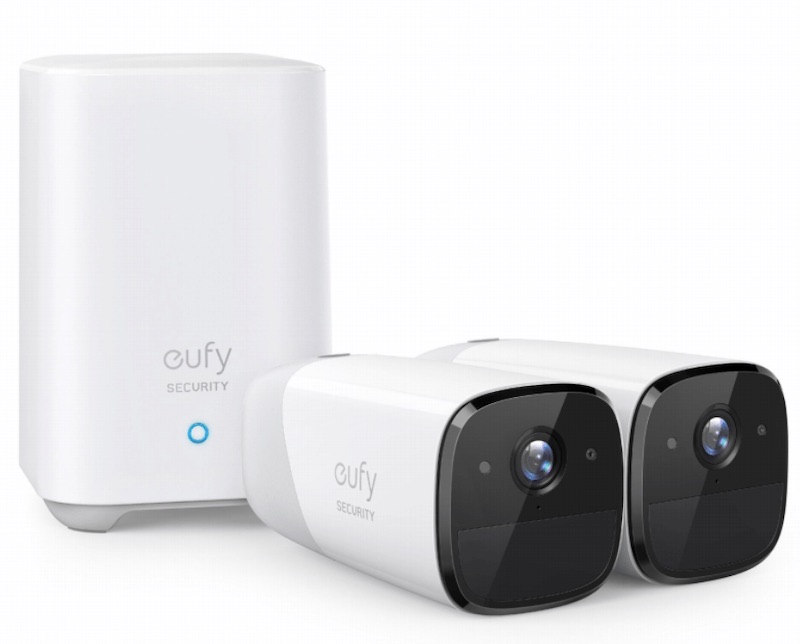
Anker Adds HomeKit Secure Video Support to EufyCam Security Camera

As promised, Anker has updated its EufyCam 2 security camera with support for HomeKit Secure Video, which allows the cameras to capture and store recordings securely in iCloud.


As noted by iMore, the free update adds secure video recording directly to Apple's Home app for users with a paid ‌iCloud‌ storage plan.

EufyCam 2 is one of the first security cameras to support Apple's new ‌HomeKit‌ Secure Video feature. Support for the feature was first unveiled during Apple's WWDC 2019 keynote, but it wasn't available when the eufyCam 2 launched last fall.

The firmware containing the support is version 2.5.9 and is currently rolling out to EufyCam 2 owners as a silent automatic update. Users can also manually check the availability of the new software via the firmware update option in the eufy Security mobile app.

The release notes don't mention the feature addition, so it's unclear whether Anker's other ‌HomeKit‌ camera, the eufyCam 2C, is also getting the upgrade.

According to Apple, ‌HomeKit‌ Secure Video is only available to users that pay for 200GB or more of iCloud storage, starting at $2.99 per month. Users with the 200GB plan can store 10 days of recordings from one camera in ‌iCloud‌ at no extra cost, while those with a 2TB plan can store 10 days of recordings from up to five cameras. ‌HomeKit‌ Secure Video recordings do not count towards a user's ‌iCloud‌ storage usage.
This article, "Anker Adds HomeKit Secure Video Support to EufyCam Security Camera" first appeared on MacRumors.com

Discuss this article in our forums


from MacRumors: Mac News and Rumors - All Stories https://ift.tt/2TX36rH

Snapseed is still alive, gets its first update since 2018 (APK Download)

What's new? Bug fixes.

When it comes to killing unsuccessful projects, Google is ruthless. The company got rid of its dying social media platform Google+ and its beloved but superfluous Gmail alternative Inbox, and it's in the process of killing Play Music. We feared Snapseed would meet the same fate, as the app hasn't seen a new release since 2018, but that has changed just today: The brand-new version 9.1 has surfaced on the Play Store, though it only brings along bug fixes.

Read More

Snapseed is still alive, gets its first update since 2018 (APK Download) was written by the awesome team at Android Police.


from Android Police – Android news, reviews, apps, games, phones, tablets https://ift.tt/2IQ57zx

Universal to Make Theatrical Movie Releases Available as $20 Digital Rentals From March 20

Universal Pictures is set to make new movies on global theatrical release concurrently available for rental via iTunes, Amazon, and other digital platforms, NBCUniversal has announced (via Deadline).


New releases including The Invisible Man, The Hunt, and Emma will be available to watch online as soon as this Friday, with each movie offered as a 48-hour on-demand rental for the suggested price of $19.99 in the U.S., and equivalent prices in international markets.

In addition, DreamWorks Animation's Trolls World Tour, which is scheduled for cinematic release on April 10 in the U.S., is set to become available domestically in theaters and on demand on the same day.

The announcement followed a historically poor weekend at the box office, as measures to limit the spread of the coronavirus pandemic saw theaters close and consumers prepare for a collective shut-in at home.
"Universal Pictures has a broad and diverse range of movies with 2020 being no exception. Rather than delaying these films or releasing them into a challenged distribution landscape, we wanted to provide an option for people to view these titles in the home that is both accessible and affordable," said Jeff Shell, CEO of NBCUniversal, in a statement. "We hope and believe that people will still go to the movies in theaters where available, but we understand that for people in different areas of the world that is increasingly becoming less possible."
According to The Hollywood Reporter, the move doesn't apply to the studio's entire 2020 calendar, and decisions regarding other titles and the duration of the policy have yet to be made.

Several films, including the next James Bond installment No Time to Die and the ninth Fast & Furious movie, have already been delayed because of the virus. Apple has also suspended all active filming on Apple TV+ projects from outside studios, temporarily pausing work on "The Morning Show," "Foundation," "See," "Lisey's Story," "Servant," and "For All Mankind."
Tag: iTunes

This article, "Universal to Make Theatrical Movie Releases Available as $20 Digital Rentals From March 20" first appeared on MacRumors.com

Discuss this article in our forums


from MacRumors: Mac News and Rumors - All Stories https://ift.tt/2wZ36P9

Realme X50 Pro 5G review: Flagship killer let down by poor cameras

Realme made a real statement with the X2 Pro in November when it told the industry that it was out to compete with OnePlus and Xiaomi in the “flagship killer” market. Three months later, the Chinese firm is back with its most powerful smartphone to date: the Realme X50 Pro 5G.

With a top-shelf SoC, lots of RAM, a high-refresh-rate display, and 5G connectivity, Realme is creating its own niche within the market. Until now, no other affordable flagship has sported 5G connectivity. That all changes with the X50 Pro 5G.

Is this phone too good to be true? Or are you better off purchasing from a well-established brand such as OnePlus or Xiaomi?

Find out in Android Authority’s Realme X50 Pro 5G review.

Rs.37999 .00
Realme X50 Pro
Buy it Now
Realme X50 Pro Buy it Now
Rs.37999 .00
About our Realme X50 Pro 5G review: I wrote this Realme X50 Pro 5G review after spending four days with the device as my primary smartphone. Realme provided us with the review unit, which was running Realme UI atop of Android 10. Realme informed us that the review unit did not run final software, and a future update will fix certain issues related to connectivity and cameras.
Show More

The physical experience

Realme X50 Pro 5G Color changing back

The glass-sandwich design has been played out an awful lot, and this phone looks perhaps too much like other Realme phones. The main design carryover is the camera module on the back. It’s positioned almost identically across Realme phones. This means that, from a distance, the X50 Pro 5G doesn’t look much different from a Realme 5 Pro. It does, however, feel far better in the hand than previous efforts. The rear glass curves into the metal frame, which itself helps you grip the phone due to the plain finish.

A couple of subtle features have been switched up to make the device feel more unique. To start, the rear glass is an understated, matte affair with some interesting color options. We have the Moss Green variant, and you can also get Rust Red. These colors change shades depending on how the light catches the phone. It’s really rather nice. The downside is that the finish is rather slippery, which is something to watch out for.

I've not encountered a Realme phone this solid. You could do some serious damage with it!

What impressed me most is the build quality of the X50 Pro 5G. I’ve not used a Realme phone that’s felt this solid before. There aren’t any rattles or creaks, and the buttons are clicky and tactile. At 207g, the device feels hefty and solid, like you could do some serious damage with it! That said, there isn’t any kind of IP certification, meaning that you’ll have to be careful with the device near liquids.

The bottom features a USB-C port, a microphone, the main speaker, and the dual-SIM card slot. At the top, there’s a microphone. On the left, there are separate volume buttons. On the right, there’s a color-accented power button. It has a gold-colored insert for added flare.

Realme introduced its first 90Hz display in the Realme X2 Pro last year. The X50 Pro 5G continues the 90Hz movement with its 6.44-inch Full HD+ Super AMOLED display, sourced from Samsung. This panel also has a 180Hz sample rate, to aid with touch-response.

Continue reading: Can you really tell the difference between a QHD and FHD display?

I found the display to be pretty good, which is to say that it wasn’t bad, nor was it exceptional. It got pretty bright at 495 nits sustained, which is a touch higher than most. Colors were a little muted, even when in Vivid mode. Perhaps I’m used to a more vibrant display, but this one came across as a bit dull.

The fundamentals

Realme X50 Pro 5G Display flat lay at angle

The main reason you might be persuaded to buy the X50 Pro 5G is the spec sheet. With a Snapdragon 865, this is one of the most powerful smartphones at the moment. You’re offered 6, 8, or 12GB RAM and either 128 or 256GB of UFS 3.0 storage.

All of this grunt results in effortless speed and usability. Similar to the build quality, I’ve not encountered a Realme device that feels this smooth and runs this well. Gaming is a great experience on this phone thanks to the processor and 90Hz display. And with 128GB base storage, there’s plenty of room for even the biggest mobile titles.

Continue reading: Phones with 12GB of RAM: What are your best options?

The one problem to note here is that relatively few games support the 90Hz display. This isn’t Realme’s fault. There are still mobile game developers that refuse to develop for  high refresh rate displays. Fortnite and PUBG Mobile are particularly annoying in this respect. The phone defaults to 60Hz for these games.

I noticed just one performance issue with the X50 Pro 5G: the camera app would crash and restart every so often. It wasn’t every time that I used the camera. This is something that could presumably be fixed in a software update.

The Realme X50 Pro 5G relies on sub-6GHz for 5G connectivity, which means it works in both the U.K. and Europe. Having a 5G phone with these specs priced under €600 is remarkable, and the X50 Pro 5G is the first of its kind. WiFi 6 is also available on the phone, which can support download speeds of up to 9.6Gbps.

The X50 Pro 5G didn’t seem to give me more battery life compared to the X2 Pro despite the slightly larger battery. If anything, both phones exhibited similar battery life. The 4,200mAh cell managed a day and a half after setting everything up and downloading my apps. I would fully expect at least a full day’s worth of usage at high brightness.

I would expect a full day of heavy usage even at a high brightness setting.

What is worth noting is how 65W SuperDart charges the phone vs. 50W SuperVOOC. This new SuperDart charger was slightly slower to 90%, but then much slower from 90% to 100%. The full 0% to 100% charge took 46 minutes, whilst 0 to 90% took just 30. This is very likely a battery-health saving measure. It seems to trickle charge the last 10% to maintain battery health.

RealmeUI has really improved

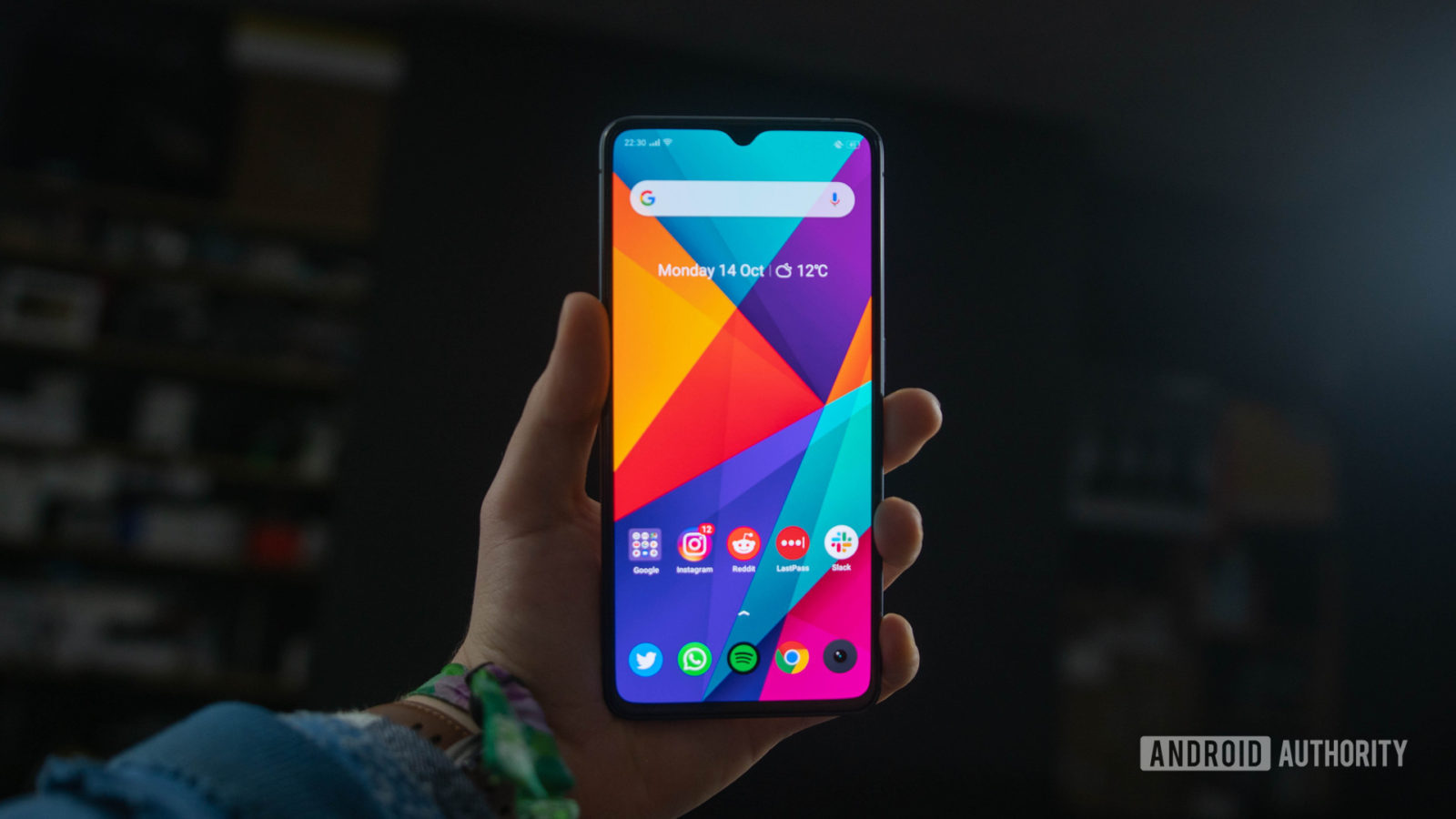
Realme X50 Pro 5G Home screen Realme X50 Pro 5G Quick settings shade Realme X50 Pro 5G Full quick settings drawer Realme X50 Pro 5G Settings menu

Realme started out using ColorOS on its phones, which did not provide the best user experience. For example, it saddled users with non-removable bloatware and a less-than-mature design aesthetic.

It’s safe to say that Realme has found its footing with RealmeUI. This user experience is based on Android 10, making it up-to-date and current. That modern feeling is obvious throughout the system. The notification shade, the settings menu, and the app drawer, for example, all feel closer to stock.

But the best bit, by a country mile, is the reduction of pre-installed bloatware — specifically the infamous Hot Apps folder. It’s gone. RealmeUI is now at a point where I could compare this to Samsung’s OneUI, which is to say that this UI is pretty damn good.

Is the quad camera any good?

Realme X50 Pro 5G Camera module up close

Flagship killers have a universal Achilles heel: their cameras. The X50 Pro 5G aims to alleviate that with a stout set of hardware. Namely, there’s a 64MP GW1 main camera, an 8MP wide-angle, a 12MP 2x telephoto, and a 2MP monochrome depth camera on the back.

Realme X50 Pro 5G Test Image Mural in town

With the caveat that the software on our Realme X50 Pro review unit was not final, the images from this camera setup are definitely not flagship-level. In good lighting, you get some good dynamic range, color accuracy, and sharpness. However, as soon as conditions become sub-par, you’re left with equally sub-par photographs.

Realme X50 Pro 5G Test Image Yellow leaves

There’s a lot of noise-reduction going on here, and that means some images look closer to oil paintings than to photos. This noise reduction can kick in unexpectedly even in good lighting. This image of some leaves is a perfect example — it was not a dark afternoon.

Realme X50 Pro 5G Test Image Wide low light

Realme says the X50 Pro 5G is capable of 20X zoom on its website, but I couldn’t even manage to capture a clean looking 5X image. As you can see, there is a lot of artificial sharpening and digital artifacts in places. Look in the shot of the church tower below. The most zoomed-in shot clearly reveals these artifacts. This is not good enough.

Realme X50 Pro 5G Test Image Church ultrawide Realme X50 Pro 5G Test Image Church wide Realme X50 Pro 5G Test Image Church 2X Realme X50 Pro 5G Test Image Church 5X

The X50 Pro 5G can shoot 20X zoom photos, though only via digital cropping. What this means is that your final 20X images look like they’ve had a cheap cartoon filter applied to them. There is little to no detail whatsoever, meaning many users will find the 20X zoom feature useless. Also, the app only shows zoom buttons up to 5X. From then on, you have to pinch to get the full 20X.

Realme X50 Pro 5G test image on wire post Wide Realme X50 Pro 5G test image on wire post 2X Realme X50 Pro 5G test image on wire post 5X Realme X50 Pro 5G test image on wire post 20X

Around the front, you’ll find a 32MP IMX616 selfie camera and an 8MP wide-angle selfie camera. These cameras can produce some decent selfies, but I have two concerns. The first is that the phone finds it hard to nail focus, and so you may have to retake the photo. The second is that, even with HDR on, dynamic range is unexceptional.

Realme X50 Pro 5G Test Image Selfie Realme X50 Pro 5G Test Image Selfie portrait Realme X50 Pro 5G Test Image Wide selfie

There’s also a significant drop-off in quality when switching from the standard to the ultra-wide selfie camera. The second shooter introduces a lot of noise and throws dynamic range out the window. This is me taking a selfie on a typically overcast day in my garden. I might be exposed fairly well, but the top third of the image is completely blown out. Not good enough.

The phone can shoot 4K video at up to 30fps on the main camera. Neither this resolution nor Full HD 60fps supports the ultra-wide camera. In Full HD at 30fps, the ultra-wide is then supported alongside the primary shooter. Up front, we have Full HD 30fps support across both front-facing cameras. The slow-motion offered is 1080p at both 240fps and 480fps.

The video footage looks sub-par. There is a heavy crop in the viewfinder at 4K 30fps, but the footage comes out without said crop. This hinders framing. There’s a lot of contrast, a lot of processed sharpness, and some frame drops that you’ll easily notice in the video footage above. Slow-motion is not captured in 1080p — which is what the camera app tells me. It’s soft and pixelated, but the motion does look smooth.

Click here to view the Google Drive folder of full-sized images!

Continue reading: The best Android camera phones you can get

Is the Realme X50 Pro 5G worth €600?

This handset is priced significantly higher than other flagship killers, and that’s going to be controversial. The X50 Pro 5G starts at Rs. 37,999 (~$528) for the 6/128GB option, then goes to Rs. 39,999 (~$556) for the 8/128GB option, and then to Rs. 44,999 (~$625) for the 12/256GB option. In Europe, that range is €599, €669, and €749, respectively. This makes Realme’s latest affordable flagship far more expensive than similarly-spec’d phones in the market.

However, Realme throws a Snapdragon 865 and 5G into the mix. This is a whole new niche. Given the rest of the device’s features, the X50 Pro 5G seems to be a good value.

Continue reading: Affordable 5G smartphones are coming soon

Should you buy the Realme X50 Pro 5G?

Realme X50 Pro 5G Realme Logo

When you consider that the only real rivals to this device are the OnePlus 7T and Realme X2 Pro, the X50 Pro 5G starts to look like a pretty good option. For €100 extra, you’re getting 5G connectivity, a more premium build, and the latest silicon.

This is, by far, the best handset that Realme has ever made. It excites me about what we might see from the brand next. It’s just a shame that the Realme X5 Pro 5G doesn’t quite live up to the excellent imaging experience delivered by the X2 Pro.

Realme X50 Pro One of the most affordable phones in its class
The X50 Pro 5G is a real step up from previous Realme offerings. Its stellar build quality, top-shelf specs, and buff battery make it a true contender for the best budget flagship on the market.


More Realme coverage


What do you think about the Realme X50 Pro 5G? Let us know in the comments!


from Android Authority https://ift.tt/37Q4sIx