Saturday, 4 April 2020

Apple Magic Keyboard for iPad Pro with trackpad, USB Type-C priced in the PH

Announced along with the new Apple iPad Pro with LiDar sensors, the new Magic Keyboard for the 11 and 12.9-inch iPad Pro is now priced in the Philippines.
Apple Magic Keyboard for iPad Pro with trackpad, USB Type-C priced in the PH
Apple iPad Pro 11-inch with the new Magic Keyboard

iPad Pro 11 and 12.9-inch Magic Keyboard priced in the PH

Apple iPad Pro 12.9-inch with the Magic Keyboard with USB-Type-C port

Apple announced the new iPad Pro in March along with the new Macbook Air. The new iPad Pro features a new LiDar sensor and updated internals that you can read more about at this link

To supplement the new iPad Pro, Apple also introduced a Magic Keyboard that doubles as a foldable protective case. It attaches to the iPad Pro with magnets and it features a full-sized keyboard, a trackpad and a USB-C port. 

This new Magic Keyboard stole the show because of what Apple calls a 'floating' cantilever design, a full-sized keyboard, a trackpad and a USB-C port (that supports pass-through charging.)

Magic Keyboard for 11-inch iPad Pro - PHP 16,990
Magic Keyboard for 12.9-inch iPad Pro - PHP 19,990

There is no word yet when it will arrive in the Philippines.

What do you guys think?

Source: Apple 1, 2


from GIZGUIDE | Your Gadget Coach https://ift.tt/2R8dc7y

Huawei P40 Pro: First Camera Samples

A week back, Huawei unveiled the company's newest camera-focused flagship 5G devices, the P40 series.
Huawei P40 Pro
Huawei P40 Pro

Related: Huawei P40 Pro Unboxing and First Impressions

One of them is the Huawei P40 Pro, a device highlighting an Ultra Vision Leica Quad Camera system.

This setup stars a brand new and customized 50MP f/1.9 RYYB Ultra Vision Wide camera with massive 1/1.28-inch sensor size, 2.44μm pixel size, 4-in-1 fusion technology, and ‭ISO 409600.
Ultra Vision Leica Quad Camera

This is currently the largest camera sensor found on modern flagship smartphones. Yes, it is even bigger than the 1/1.33-inch sensor size of Samsung's 108MP sensor. Since it uses an RYYB sensor, it designed to capture more light and details than the basic RGGB lens of Samsung.

DxOMark: Huawei P40 Pro leaves every top camera phones in the dust

Moreover, the main cam is paired with the first 
Full Pixel Octa PD Autofocus on a smartphone and OIS.

It also has a 40MP f/1.8 SuperSensing Cine ultra-wide secondary camera,  12MP f/3.4 RYYB 5x Optical Telephoto periscope camera with OIS, and a ToF 3D Depth Sensing fourth camera.

The P40 also uses an advanced Color Temperature Sensor with 8 color channels for up to 45 percent better color precision.

To recall, this is powered by Huawei's upgraded ISP (image signal processor) and NPU (neural processing unit) designed to swiftly process huge amounts of information and enhance clarity, dynamic range, bokeh effect, and more at pixel-level at day or night.

For videos, this phone can record up to 4K 60fps with AIS stabilization.
Dual-cam in front
Dual-cam in front

For selfies, P40 Pro uses a 32MP f/2.2 main camera with autofocus and a secondary IR Depth/Gesture Camera. 


The secondary IR Depth/Gesture Camera is designed to help take selfies with a "pro-level" bokeh effect.

The P40 also has an array of AI tricks to even enhance your photos and videos. You can learn more about it here.

That being said, here are the first few shots that we took using the Huawei P40 Pro.

Camera Samples

Daylight main cam
Daylight main cam

As expected, the Huawei P40 can take images with super crisp details. It did very well even if my subject is under the direct hit of the sun. The colors are on point as long as dynamic range and contrast.
Daylight ultra-wide
Daylight ultra-wide

The 3:2 ultra-wide 40MP secondary camera produced similarly sharp images with a wider field of view. Unlike other ultra-wide cams, it isn't overly wide. It could be a good thing for those who want wide shots with less distortion.

Colors are also similar, but the depth effect on the primary camera is superior.
5x optical zoom
5x optical zoom

Here, I used the 5x Optical Telephoto camera and I'm very impressed. Details are really crisp, noise is almost non-existent, colors are still on point, and it isn't overexposed. The background blur is incredible for a smartphone as well.
Close-up, main cam
Close-up, main cam

I tried the primary camera on the Jollibee Funko again. This time, I moved closer. I changed the angle as well to take a slightly against the light image.

It resulted in an image with a slightly dimmer exposure. But, this is still considered a very good image with plenty of details and fantastic depth.
Well-lit, normal vs 100 percent crop

Here, I took a photo of our sleeping puppy. The image is a little bit overexposed, but fortunately, it retailed the details. Just check the 100 percent crop on the left side.
Ultra-wide to 50x zoom 1
Ultra-wide to 50x zoom 2

As expected, the P40 Pro's 50x maximum zoom is incredible. It can really zoom and the zoom quality is slightly better than P30 Pro zoom last year. Guess what? The colors are still consistent.

But of course, it won't still be super good. Noise will be present and texture rendering is far from great. The main purpose of this zoom is to allow users to see what they can't see with the naked eye.

For me, this camera did a fine job in that regard.
Indoor shot
Indoor shot

As expected, the P40 Pro can take images with a high level of detail in most lighting conditions. The colors tend to be a bit duller, but the shot that we took inside the house with artificial light is still well-exposed and considered as very good overall.
Low light main cam
Low light main cam
Low light ultra-wide

Next is we tried it in low light. Both the main cam and the wide cam performed well even in the dark. The exposure is just brighter on the primary camera due to its larger sensor size. The wide cam has to be the nicest in its class yet. Colors and shadows are still okay and it is far from being a noisy image.

Also, for me, it shoots nicer point-and-shoot low light images than most the Night mode of most high-end phones.
Low light main cam vs 100 percent crop 1
Low light ultra-wide cam vs 100 percent crop

As mentioned earlier, they take images with crisp details even in low light. The color accuracy is just off for the main cam this time. The ultra-wide cam did a better job.
Low light main cam vs 100 percent crop 2

But most of the time, the main cam will do a good job. It's amazing to know that a mobile camera sensor can take images like these even without the use of the Night mode.
Auto vs tap to focus (80 percent crop)

Usually, it is hard to tap to focus on bright street lights in the dark. But the P40 Pro nailed this scenario with ease. Even when cropped to around 80 percent, the details are still quite sharp. I'm impressed.
Low light main cam w/o Night mode
Low light main cam w/ Night Mode

Interestingly, the low light shot without Night mode is even brighter than the shot with Night mode. It won't automatically mean that it is better though. Details are sharper, colors are truer, and highlights/exposure are more controlled on the shot taken with Night mode.
Low light ultra-wide w/o Night mode
Low light ultra-wide w/ Night mode

For ultra-wide shots, the default cam takes images with a 3:2 aspect ratio. When you use the Night mode, it'll be back to 4:3 ratio. Anyway, the Night mode enhanced its brightness, details, and dynamic range.
Mid-range smartphone vs Mate 30 Pro vs P40 Pro in near a pitch-black situation

The low light performance of this device is incredible. Even without a flash and Night mode, it can see well in a near pitch-black situation. The Mate 30 Pro did well here with warmer colors, but the details are even sharper on the P40 Pro. Colors are more accurate as well.
Daylight selfie with Beauty and Portrait effects

This phone delivered the nicest selfie cam on a Huawei smartphone yet. It takes selfies with crisp details in different lighting conditions and it has one the best selfie bokeh effect yet for me. The shots that I took are quite wide and the default face beauty is not too much.
Detailed selfie without the Beauty effect

If you turn off the Face beauty mode, you'll see selfies with an incredible level of detail. It respects your skin tone too and it won't make your display too white.
Indoor selfie
Indoor selfie

Even if you are in a situation with artificial lighting, you will still get really good selfies.
Low light selfie
Low light selfie 

In low light, the selfies that you will get will be softer. But, it is still sharper with better colors than most selfie cams out in the market in the dark. It also has a Night mode for selfies and you can turn on the screen flash as well.

For videos, I'm also impressed as it can take up to 4K 60fps at the back and the selfie cam. You may check the samples in our unboxing video here.


Quick thoughts

Huawei must be really proud of the camera capabilities of this handset.

At PHP 50,990, the camera experience is amazing so far as it has super-fast and accurate focus speed, crisp details in most lighting conditions, sharp details in bokeh shots with natural-looking blur, powerul zoom performance, accurate low light shots. It also takes really nice selfies and videos.

In low light, there are times where colors won't be that consistent. But, this is just nitpicking on my part. Huawei is the king of low light in the mobile photography world.

From memory, it is a major leap coming from most flagship camera phones I've tested yet including the Mate 30 Pro.

I can't wait to compare it with other more expensive flagships phones.


from GIZGUIDE | Your Gadget Coach https://ift.tt/2xSWH8j

Happy Birthday To Me [ 3 Months VIP ]

My birthday is coming next week and i want to giveaway 2 VIPS !!! Prize: - 3 Months VIP Instructions: - The first 2 persons who tells the right year of my birth will get the VIP Note: - Only one entry per member will be counted and the winner will be mentioned on the topic. - Editing comment will be counted as disqualified

from iOSGods RSS Feed https://ift.tt/39HqttZ

If you’re at a professional crossroads, this software engineering training might help.


You can get the broad overview training needed to break into this lucrative field with the instruction in The Complete Introduction to Software Engineering Bundle. It’s on sale now from TNW Deals for just $59.99, hundreds of dollars off the regular price.


from The Next Web https://ift.tt/2UHWn5B

Did you know: The Samsung Galaxy Note was mocked and predicted to flop at launch

The original Samsung Galaxy Note

Launched in 2011, the Galaxy Note was the first entry in Samsung’s hugely popular phablet series. Beloved by power users for its top-tier specs, enormous displays, and the iconic S Pen, the Galaxy Note has become a mainstay of Samsung’s winter release schedule every year.

The glowing reviews and fan following the Galaxy Note family has today wasn’t always a given, however. In fact, the original Galaxy Note was mocked by many consumers and media outlets for being too large for everyday use.

The phone featured a display that measured 5.3-inches across. It was considered massive at the time, especially when compared to other high-end phones released the same year. For example, the Galaxy S2 had a 4.3-inch display, while the iPhone 4s’ screen measured just 3.5 inches. For that reason, the initial reaction to the phone was one of shock and, in some cases, outright ridicule.

The media had a field day with the Galaxy Note.

In its review of the device, ZDNet said “you’ll look faintly ridiculous” making a call with the Galaxy Note. Android Central described the phone as “more of a technical showcase than a product with mass appeal,” while SlashGear said that the phone is “simply too much to pocket” for the average user.

I hate to admit it, but I was a skeptic as well. I much preferred smaller devices at the time; phones I could use with one hand and slide into my pocket with ease. Along with many other journalists, I was under the impression that the Galaxy Note will turn out to be a flop. Boy was I wrong.

Samsung proved everyone wrong

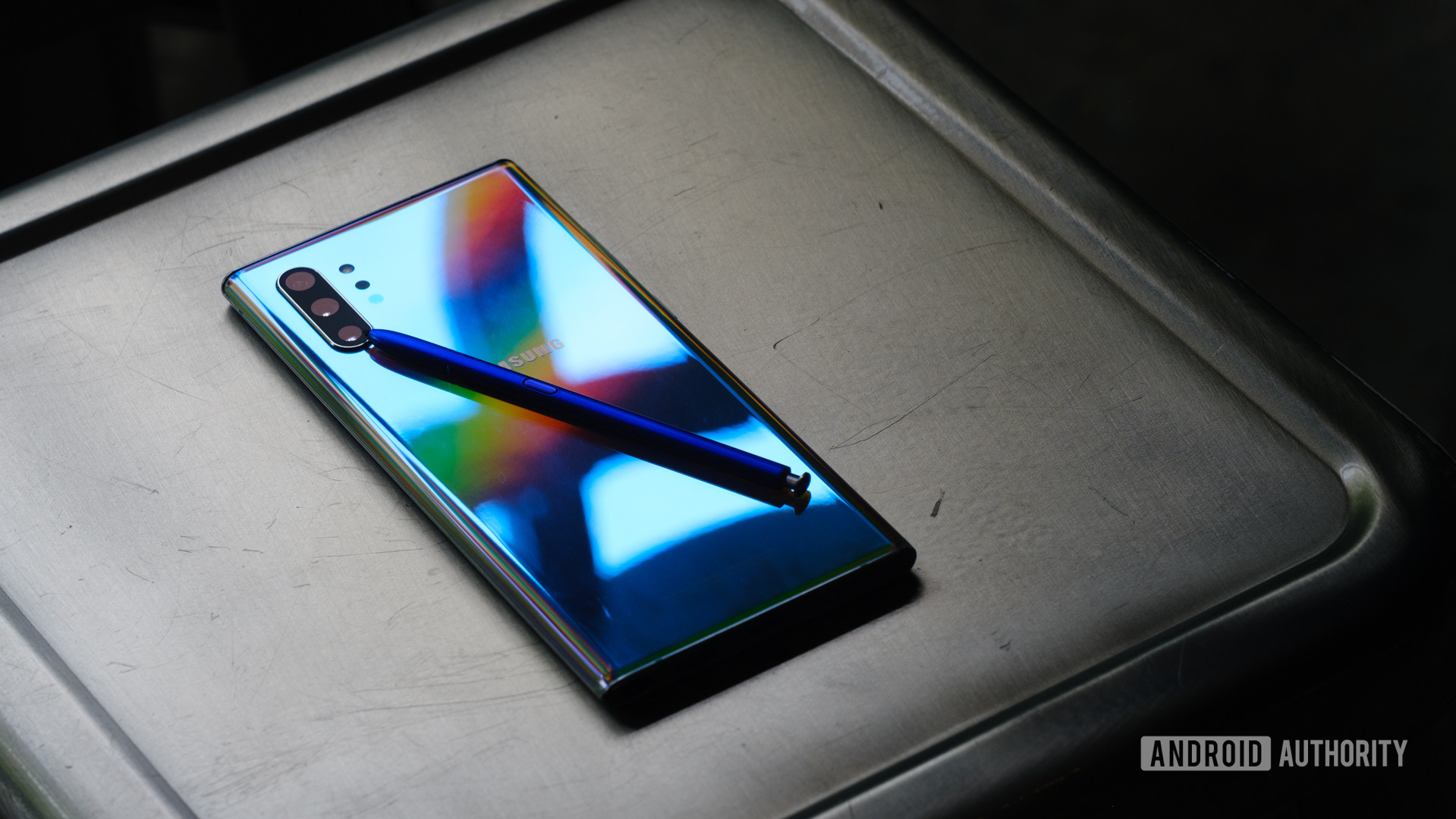
Samsung Galaxy Note 10 Plus screen head on 2

The massive Galaxy Note 10 Plus

Consumers quickly realized the benefits of a larger screen and pulled out their wallets. Samsung managed to quiet the critics by selling more than 10 million units of the original Galaxy Note in the first 10 months. Although these sales numbers weren’t record-breaking and were lower than those of other popular high-end phones at the time (like the iPhone 4s), they were still way above expectations.

Not only did the Galaxy Note turn out to be a big success, but it also went down in history as one of the most influential Android phones ever made. It changed the market by revealing that consumers want phones with big displays and are willing to pay top dollar for them. As a result, the market responded. Manufacturers hopped on the bandwagon and gradually began increasing the sizes of their phones, which is a trend we’re still witnessing today.

While the Galaxy Note with its 5.3-inch display seemed massive at the time, it’s considered small by today’s standards. For example, the latest Galaxy Note 10 Plus has a 6.8-inch display, while the S20 Ultra goes a step further with a 6.9-inch screen. Although phones today sport much smaller bezels than they did 10 years ago, both flagships mentioned have a larger footprint than the first Galaxy Note.

With all that in mind, we have to give credit where credit is due. Samsung believed bigger is better before anyone else did, and it was right. The tech giant showed the world back in 2011 that it was a true innovator. It knew what we, the consumers, wanted and not what we thought we wanted.

The company’s vision and mindset at the time reminds me of those of the great Henry Ford, the founder of the Ford Motor Company and the brains behind the Model T, which was named the most influential car of the 20th century. The man who brought cars to the masses said, “If I had asked the people what they wanted, they’d say faster horses.”


This is the first in our “Did you know” series where we’ll be diving into the Android history books to uncover important and interesting facts or events that have been forgotten over time. What do you want to see us cover next? Let know in the comments below, and be sure to share your memories of the first Galaxy Note!


from Android Authority https://ift.tt/34bP5tC