Monday, 6 April 2020

Apple is making million face shields per week to help health workers


Tech companies worldwide are trying to help health agencies and governments fight the coronavirus pandemic. Today, Apple said it has designed a special face shield for medical professionals. The company’s CEO, Tim Cook, posted a video on Twitter saying that the tech giant will ship a million face shields by the end of the week; after that, an additional one million units each week. These masks pack flat, with one box containing a hundred pieces. Cook said Apple is making these shields in the US and China, with each unit taking less than two minutes to assemble. Apple is dedicated to…

This story continues at The Next Web

Or just read more coverage about: Apple


from The Next Web https://ift.tt/3e12IQX

Google Maps now shows routes of FREE hospital shuttle rides for frontliners

In cooperation with the government agencies DOTr and DOH, Google integrates important local information in Map to help medical frontliners in fighting the pandemic disease COVID-19.
Google partners with DOTr and DOH in updating maps for medical frontliners and users
Google Map update for hospital workers

Google Maps now shows routes of FREE hospital shuttle rides for frontliners

The Department of Transportation (DOTr) has free shuttle services with 19 routes as of the moment. Google Maps include it on the public transport tab thus medical workers can conveniently check their transportation to and from their workplace. Aside from Metro Manila, the routes include San Jose del Monte, Bulacan up to Cabuyao, Laguna.

Medical frontliners must launch first the Google Maps app then type the intended destination and tap the "Directions" button. After that, they should select the "Public Transit Tab" with a train icon as a symbol.

If available, they can see the recommended route that utilizes the  DOTr’s hospital shuttle routes, when available.
 Sample route update
Sample route update

The update is said to be helpful for medical workers as they can now calculate their estimated travel time. Also, they can find the best way and schedule to get from their home to their hospital and vice versa. Soon, there will be updates regarding the bus route and more free service from the government. 

Google will also be providing up to USD 5M (around PHP 250M) worth of Search ads credits to Philippine government agencies including the DOH among others to help in the communication of credible and useful information in relation to COVID-19.

Moreover, when an individual type "COVID testing" on Google Search or Maps, it will lead to DOH-certified COVID-19 reference laboratory hospitals nearby. 
 Users will be directed to DOH-certified COVID-19 laboratory
Users will be directed to DOH-certified COVID-19 laboratory


However, he/she should refer first to the Screening Tool posted on the DOH COVID-19 website. Aside from that, calling the COVID-19 hotline (02-894-COVID / 02-89426843) is also mandatory.

Also, check the DOH COVID-19 website.

What do you guys think?


from GIZGUIDE | Your Gadget Coach https://ift.tt/2yvr4SC

Sunday, 5 April 2020

Designing for cognitive accessibility: Where to begin


Digital accessibility enables people with disabilities to independently use websites and technology. Accessible design often focuses on people with vision or hearing disabilities. Designing for cognitive accessibility (COGA) rarely receives as much attention, but is equally important. At first, COGA may feel too complex because of the wide range of cognitive disabilities. The medical terms may be overwhelming. Yes, accessible design can help people with dementia, Alzheimer’s, aphasia (loss of ability to understand and express speech), autism, attention-deficit/hyperactivity, dyslexia and dyscalculia (severe difficulty in making mathematical calculations) and more. But these same accessible designs can also help anyone use their…

This story continues at The Next Web


from The Next Web https://ift.tt/39LhR5J

There’s now a petition to stop Samsung from using Exynos processors (Update)

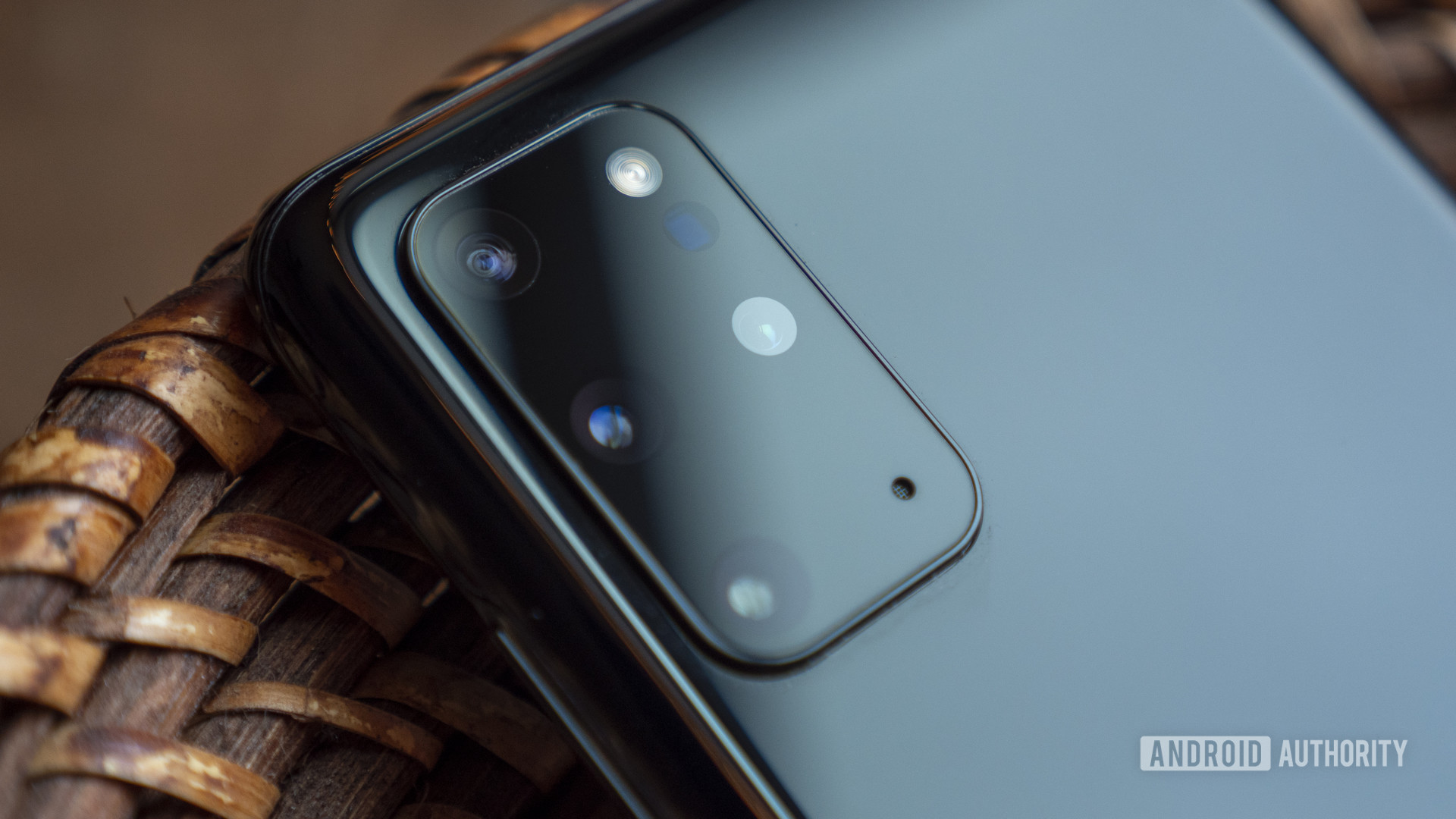
samsung galaxy s20 plus review black back on book 3

Update, April 6 2020 (2AM ET): Samsung has reportedly responded after enthusiasts criticized the company for using its Exynos 990 chipset in some Galaxy S20 variants. The 2020 flagship series ships with the Exynos processor in some markets, while the likes of Korea and the US get Snapdragon 865 chips instead.

Our own testing shows that the Snapdragon version beat the Exynos variant for pure performance, but the Exynos 990-toting S20 series displayed better battery life. So what does the Korean brand have to say about this?

“The Galaxy S20 is a smartphone that’s been reimagined to change the way you experience the world and depending on the region, the Galaxy S20 will either ship with the Exynos 990 or the Snapdragon 865,” Samsung told SamMobile in a statement.

Read: Before and after — Galaxy S20 Ultra camera update is a mixed bag

“Both the Exynos and Snapdragon processors go through the same strict and rigorous, real-life testing scenarios in order to deliver a consistent and optimal performance over the entire lifecycle of the smartphone.”

Nevertheless, Samsung previously confirmed that it was shutting its custom CPU division, presumably in favor of standard Arm Cortex CPUs. This move clearly suggests that it’s not happy with at least one element of its Exynos processors.

The Korean manufacturer is also working with AMD to deliver new mobile GPUs, so hopefully Exynos chipsets are in for a big boost in the future.

Original article, March 20, 2020 (): A new petition has popped up on Change.org against the use of Exynos processors in Samsung phones. The petition demands that Samsung stop using Exynos chipsets instead of Qualcomm’s Snapdragon counterparts. It also calls into question the use of Samsung camera sensors on Samsung phones in place of the ones made by Sony.

“These parts are inferior, and there are numerous comparisons online,” the online petition states. “The Exynos phones are slower, have worse battery life, worse camera sensors and processing, get hotter and throttle faster, etc.,” it adds.

It’s true that Samsung’s Exynos variants traditionally underperform in comparison to Snapdragon versions. The company launches Exynos variants of its phones — especially flagships such as the Galaxy S and Galaxy Note series — in markets such as Asia and Europe. Meanwhile, the same Samsung phones are launched in North America with Snapdragon processors.

Depending on which one you get, there could be major differences in your experience. For instance, the Snapdragon 865 features Cortex A77 cores which promise up to a 20% performance boost in comparison to the Cortex A76 cores used in Samsung’s competing Exynos 990 chipset. The Snapdragon flagship also gets the Adreno 650 GPU which outperforms the Mali G77 GPU on the top-of-the-line Exynos SoC.

Our own testing also revealed some pretty big differences between the CPU and GPU benchmark results of the Snapdragon and Exynos variants of the Galaxy S20 Plus. We’ll post those results very soon.

In the meantime, the petition on Change.org is still awaiting signatures. So far, it has managed to accumulate only 17 signatures, which is not nearly enough for Samsung to sit up and take notice. It’s not like it doesn’t already know about this problem.

The Exynos vs Snapdragon issue pops up every year when Samsung releases its flagships. If it hasn’t changed its stance on custom chipsets yet, it’s unlikely it will do so anytime soon. However, the company is said to be in talks with AMD to boost GPU performance on its Exynos processors so maybe that could make things better.

What do you think Samsung should do? Should the company only sell Snapdragon versions of its phones across different markets? Let us know your thoughts in the comments section below.

More posts about Samsung


from Android Authority https://ift.tt/2wrmUKR

Watch: How Tesla engineers are building a ventilator using car parts


Tesla is now building ventilators to help health workers amid the coronavirus outbreak, as there’s a shortage of these machines. In a new video released by the company last night, Tesla engineers explained how they’re building a ventilator prototype using parts of Tesla‘s cars. The team is using a bunch of parts out of Tesla 3, such as the infotainment system and the vehicle controllers to regulate the airflow in the ventilator, and the touch screen panel to control the system. [Read: How to disinfect your laptop screen and keyboard] Last month, Elon Musk said the company planned to deliver FDA-approved…

This story continues at The Next Web

Or just read more coverage about: Tesla


from The Next Web https://ift.tt/2ViIPN1