Tuesday, 11 August 2020

Stunning: Xiaomi just released the world's first mass-produced transparent TV!

Xiaomi has another surprise for its 10th-year anniversary celebration aside from the Mi 10 Ultra and Redmi K30 Ultra—the Mi TV LUX OLED Transparent Edition.
Stunning: Xiaomi just released the world's first mass-produced transparent TV!
Mi TV LUX OLED Transparent Edition

Transparent TV anyone?

The new Xiaomi Mi TV LUX OLED Transparent Edition is the world's first mass-produced transparent OLED TV. The TV uses a mostly "see-through" transparent OLED panel (TOLED) which makes images appear like they float.
Transparent TV!
Transparent TV!

It is a 55-inch big television with 4K resolution, 150000:1 contrast ratio, 10-bit color, and 93 percent DCI-P3. The TV also has a 120Hz refresh rate, MEMC 120Hz motion interpolation, and 1ms response time.

Definitely, the screen looks cool and looks like a window to another world.

Inside, the TV boasts a custom MediaTek 9650 chip with Xiaomi's AI Master Smart Engine with over 20 optimization algorithms and 5 major use case dedicated optimization. It also has AI Master for audio which automatically detects the type of content being played as well as Dolby Atmos virtual surround sound.

The TV is also using a custom MIUI for TV to take advantage of the transparent display with an Always On mode to display images and text when not in use.

It uses a slim 5.7mm frame and a circular base. It cannot be wall-mounted though.

China price with direct to PHP conversion (no taxes and duties yet):

Xiaomi Mi TV LUX OLED Transparent Edition - CNY 49,999 (around PHP 352K)

The TV will be available in China on August 16. There's no word yet if it will be official in other parts of the world yet.

Source: Xiaomi, Via: GSMArena


from GIZGUIDE | Your Gadget Coach https://ift.tt/3gJEoEh

MediaTek and Intel advances partnership to bring 5G to next generation PCs

MediaTek announced over the weekend its partnership with Intel to bring the 5G experiences to next-gen PCs.
MediaTek and Intel advances partnership to bring 5G to next generation PCs
Joe Chen, MediaTek President

5G connectivity to Intel-powered PCs!

MediaTek’s T700 5G modem, which will be used to bring 5G connectivity to Intel-powered PCs. It has a complete 5G standalone (SA) calls in real-world test scenarios. 

Additionally, Intel has progressed on system integration, validation, and developing platform optimizations and is readying co-engineering support for its OEM partners.

With Intel’s deep expertise in the PC space and our groundbreaking 5G modem technology, we will redefine the laptop experience and bring consumers the best 5G experiences, said MediaTek President Joe Chen.

The MediaTek T700 modem supports non-standalone and standalone Sub-6 5G network architectures. It is expected to deliver consistently faster speeds and more reliable connectivity. 

MediaTek's modem is also highly power-efficient to extend the battery life of laptops. The company is also said to be rolling out its advanced 5G technology across the PC, mobile, home, auto, and IoT segments to make super-fast connectivity accessible to everyone.

A successful partnership is measured by execution, and we're excited to see the rapid progress we are making with MediaTek on our 5G modem solution with customer sampling starting later this quarter. Intel is committed to enhancing those capabilities on the world’s best PCs, said Chris Walker, Intel corporate vice president and general manager of Mobile Client Platforms.

The first laptops 5G modem solution-enabled by the MediaTek and Intel are expected in early 2021. 

Who's excited?


from GIZGUIDE | Your Gadget Coach https://ift.tt/3iBO6ZJ

TikTok tracked Android user data despite Google privacy protections

tiktok on android phone

  • TikTok tracked the MAC addresses of Android phones despite Google’s privacy protections.
  • The practice ended in November.
  • The news comes just as the President is threatening a ban on the service for potential spying.

TikTok already faces the threat of a US ban due to concerns about potential Chinese spying, and its latest privacy incident won’t help matters.

The Wall Street Journal has learned that TikTok’s app was tracking the MAC addresses (the hardware identifiers for networked devices) of Android users for at least 15 months despite Google policies and systems forbidding the practice. It reportedly used a well-known “workaround” security hole to get the data as well as an “unusual” extra layer of encryption that masked the approach.

The company didn’t notify TikTok users or give them a choice regarding the data collection. When users first ran the app on a new device, TikTok bundled the MAC data with information including the semi-anonymous advertising ID used to track user behavior. You can reset the advertising ID on a phone, but you can’t change the MAC address.

TikTok ended the tracking with an update on November 18, the WSJ said. TikTok didn’t directly address the claims when the newspaper reached out for comment, but did say the “current version” of its app doesn’t gather MAC addresses.

See also: The best TikTok alternatives and apps for Android

Google said it was investigating both the report’s findings and those of an anonymous Reddit post from April, but it declined to comment on the loophole. AppCensus’ Joel Reardon said he filed a bug report with Google about the hole in June 2019, but the flaw was clearly exploitable past that point.

There’s no mention of similar tracking for iOS users. Both Apple and Google officially banned apps from reading MAC addresses several years ago.

The behavior isn’t unique to TikTok, with AppCensus estimating that about 1.4% of Android apps exploiting the loophole to send the MAC address. The encryption was odd, however, and it wasn’t clear just what TikTok’s intentions were for the data. It also follows just weeks after iOS 14 revealed that TikTok was accessing iPhone clipboards more than necessary.

Both Google and TikTok might have to answer more questions.

The findings come at the worst possible time for TikTok. President Trump and other American politicians are pushing for TikTok to sell itself to a US company over concerns its Chinese parent company ByteDance might ask it to collect sensitive data for surveillance. TikTok has always denied collecting data for China and made a point of distancing itself from ByteDance, but this could easily fuel suspicions even if the data is used only for advertising and other business purposes.

There are already calls for action, too. Senator Josh Hawley, a politician known for criticizing the behavior of internet companies, told the WSJ that Google should pull TikTok from the Play Store due to both breaking the rules and possible violations of child privacy laws. This won’t necessarily lead to legal action beyond the potential ban, but it’s evident that both Google and TikTok might have to answer more questions.


from Android Authority https://ift.tt/2PJwrDd

You can now turn yourself into a Google Search result

Google Search People Cards

Credit: Google
  • You can now create your own “People Card” for Google Search.
  • It will show up every time someone searches for your name.
  • The feature is currently only available in India.

We’re all used to looking up famous people on Google. When you search for a well-known personality, Google usually produces a knowledge panel in the results. This panel gathers information from trusted sources and presents it in an easy-to-understand, digestible format. But what happens when you search for yourself? Unless you’re someone famous, all you’ll come across is some social media profiles or random mentions of other people with the same name. But now you can change that.

Google has announced a new feature that lets you turn yourself into a Google Search result. Yes, you heard that right. You can now create your own “People Card” on Google Search with information about your name, occupation, location, work experience, phone number, email address, and more.

“It’s like a virtual visiting card, where you can highlight your existing website or social profiles you want people to visit, plus other information about yourself that you want others to know,” Google writes in a blog post.

Also read: Google Pixel 4a review: Google’s best phone in years

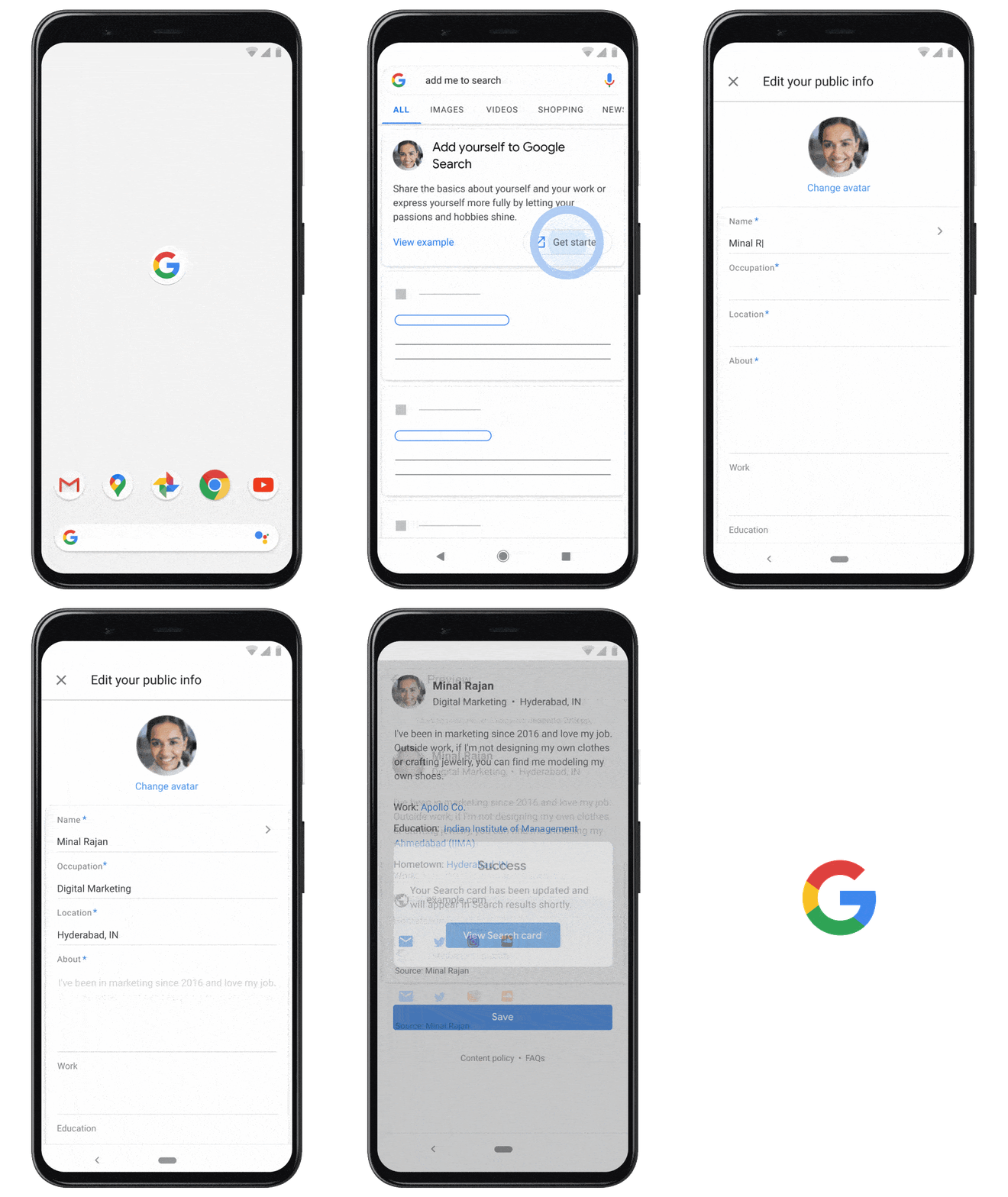
Creating a People Card for yourself is very easy. All you need to do is sign into your Google Account and simply search for your name or write “add me to Search” in the Google Search bar. “The more information you provide, the easier it is for people to find you,” says Google. Take a look at the GIF below to see how to create People Cards in Google Search.

Google People Cards in Google Search

Credit: Google

Once a People Card is available for someone, you’ll see a module with the name, profession, and location of the person. You can tap this module to see their virtual card. You’ll see multiple cards for people who share the same name.

Only one People Card can be created per Google account, and a phone number is required to authenticate the account. If you wish to unlist yourself, you can delete your People Card at any time. Google says it also has “a number of mechanisms” to protect people against abuse or spam. However, the company has not detailed those measures.

People Cards in Google Search are now rolling out in India. They will be available only in the English language for now. There’s no word on when Google will roll out the feature to other parts of the world.

Next: The best Android phones (August 2020)


from Android Authority https://ift.tt/3adhtPj

Huawei thinks all-screen fingerprint unlock is the future

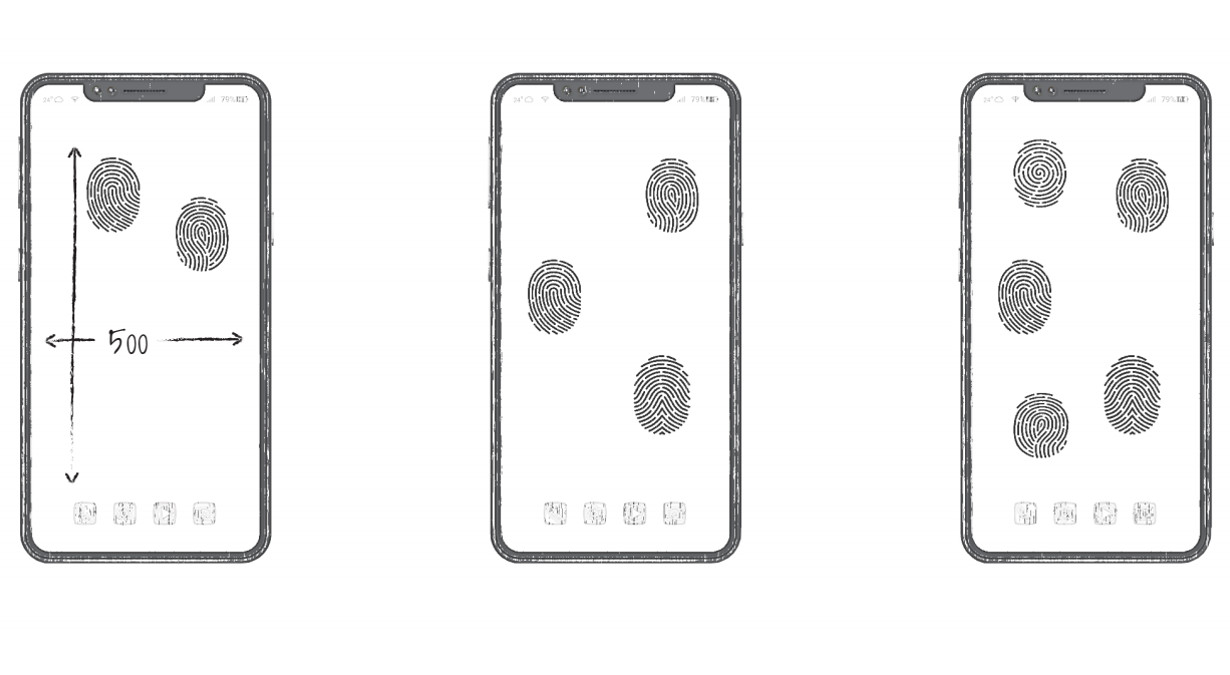
Huawei all screen fingerprint unlock patent

Credit: Supplied by Huawei
  • Huawei has filed a patent for all-screen fingerprint unlock technology.
  • The firm also outlined how it would work and possible use-cases.
  • Vivo previously demonstrated a concept phone with the tech last year though.

All-screen fingerprint unlock tech is perhaps the holy grail for biometric authentication right now, allowing you to tap anywhere on the display to unlock the phone. Now, Huawei has confirmed to Android Authority that it’s filed a patent for the tech in six markets (China, Europe, the US, Japan, Korea and India), and that it’s pending approval.

The Chinese brand has also outlined a few potential use-cases for the technology, such as requiring fingerprint verification for individual app icons (e.g. phone gallery). This idea isn’t new, as we’ve seen OEMs offer app lock functionality for a while now. But it does mean you can theoretically unlock and launch the app in one go rather than tapping the icon and then tapping your existing in-display fingerprint sensor or traditional physical scanner.

Huawei also mentions the ability to quickly enter the SMS app to view and respond to texts without having to unlock the phone first. This could therefore make lockscreen interactions far more streamlined, as merely tapping a lockscreen widget or notification could theoretically unlock the device right away.

Related: How fingerprint scanners work — optical, capacitive, and ultrasonic variants explained

The manufacturer adds that users will have the freedom to “activate sensors in a chosen area on the screen while deactivating the rest on the screen space” in order to reduce power consumption. This sounds like you might be able to disable the sensors in the top third of the screen if you only tend to use the bottom third and middle for authentication, for instance.

Biometrics firm Synaptics reckoned back in 2018 that we’d eventually see all-screen fingerprint unlock enable a state of continuous authentication. That is, the phone is constantly checking to make sure it’s your fingerprint as you use it. There’s no word if this is the route Huawei plans to take too, but it would be a great boost for security if it worked well.

We’ve asked Huawei about commercial availability, costs associated with all-screen fingerprint unlock, and who it’s working with (e.g. Goodix). We’ll update the article if or when they get back to us.

This wouldn’t be the first time we see this tech touted by a brand though, as the Vivo Apex 2019 concept phone had all-screen fingerprint unlock too. So you have to think that any patent filing for the tech by Huawei would face some resistance. Nevertheless, it certainly seems like this is the way forward for biometric authentication.

Next: Can Huawei survive without its custom Kirin chips?


from Android Authority https://ift.tt/2XMTBgi