I bought a Tile Slim to help my occasional forgetfulness. I’m pleased to report mostly good things about how well it worked, how it performed in my wallet, and its value for money. However, there are a few considerations here.
Just so you understand, I’m sometimes forgetful about physical objects. I do sometimes, just occasionally, misplace my wallet or my phone. Asking my Nest Home to “find my phone” has saved me some bother. Then I lost my wallet for about two weeks and that brought everything to a head. (This was during complete lockdown, so it had to be in the house somewhere!)
The Tile Slim is one specific remedy for that unfortunate saga. Did it work? Here are my thoughts.
About this Tile Slim review: I paid for the Tile Slim from an Amazon listing with my own money, and used it for about five weeks.
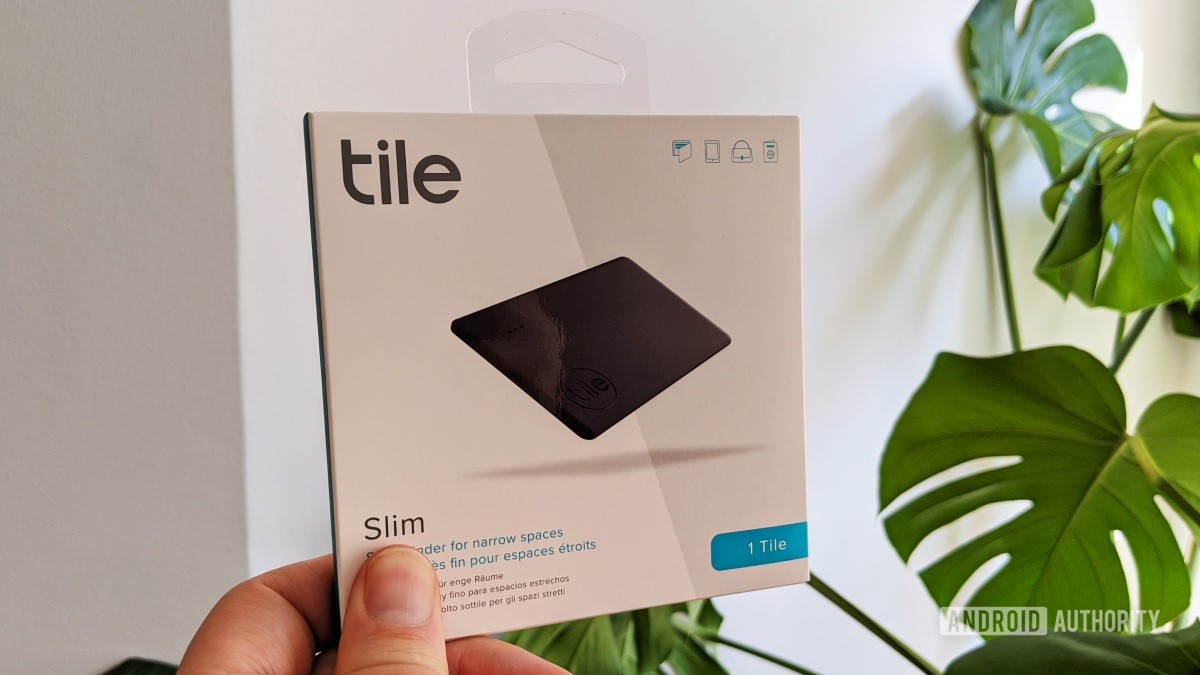
What is the Tile Slim?
The Tile Slim is a thin, credit card-sized tracker meant to help you find various objects. Tile envisions it will go well in your wallet, but you could also stash it with important documents, stick it to the side of your laptop, or slide it into a billfold with travel documents such as your passport.
The Tile Slim joins several other form factors in the Tile lineup, which include the small, round Sticker, the Tile Mate, and the Tile Pro. Each is meant to fit certain scenarios. The Sticker might work on your TV remote or a camera lens, while the Tile Mate and Tile Pro are for everyday objects such as luggage, purses, teddy bears, and, yes, even pets.
How does the Tile Slim work?
The Tile Slim uses Bluetooth with your smartphone to connect, and stay connected. Following a rapid setup process, each Tile is identified in the Tile app on your smartphone. The app will tell you where it thinks the last location of your Tile was, if it’s in range, and can trigger an alarm if you need.
It’s a static device that doesn’t need attention after setup. The only time you use the Tile Slim is when you think you’ve lost your wallet. I found I could hear the Tile Slim’s alarm on its loudest mode anywhere in my house. I tested it under some clothes, buried in my couch, and left in a far-off room. It’s not so shrill all your neighbors can hear it, but it’s loud enough that you can hunt it down.
The Tile Slim has a 200ft Bluetooth range, or about 61m. That’s quite a long way, and it stood up to my testing. Of course, there are limitations. If someone does steal your wallet out of your pocket, they’ll likely move out of the range of your smartphone’s Bluetooth radio pretty quickly. You may also accidentally turn off Bluetooth or set your phone to airplane mode, or engage a battery saving mode that switches Bluetooth off to conserve power. In short, it’s not foolproof, but in most normal situations it should work.
See also: The 5 best find my phone apps, plus other find my phone methods too!
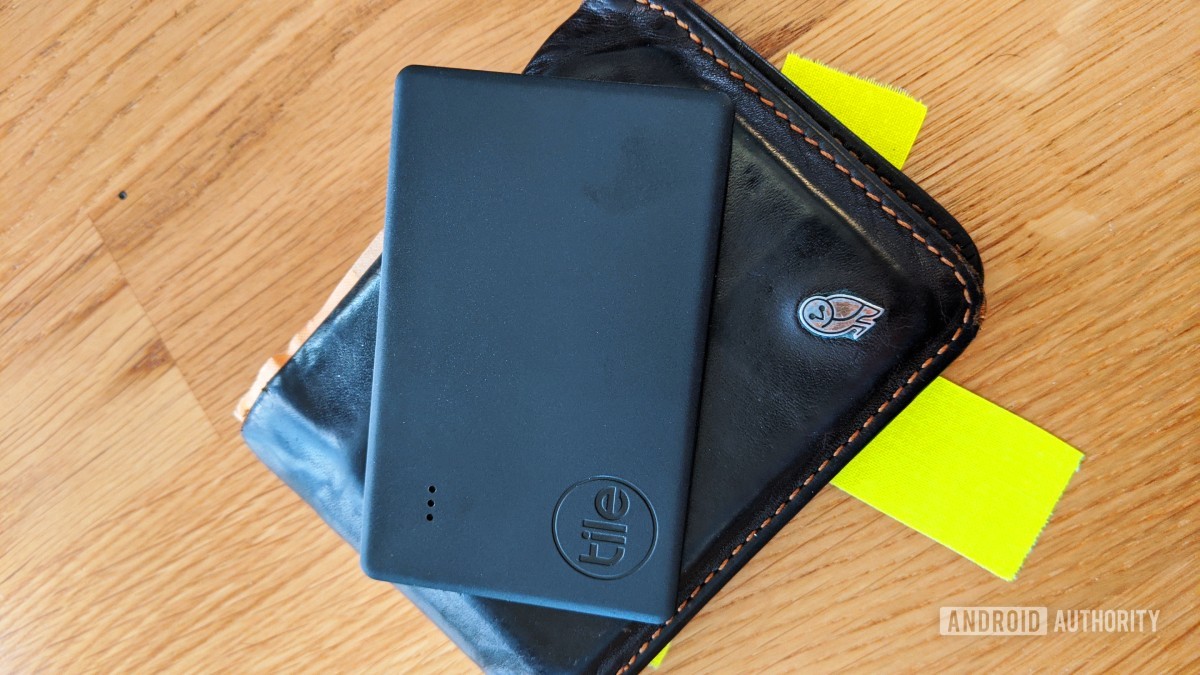
What do I like about the Tile Slim?
Actually, quite a lot:
- The App. Tile comes neatly packaged, and you’re guided to install the Tile app from the Google Play store. It doesn’t take long to sign up, activate the Tile device, and start tracking. The app works well. Also, if you change phones, just log in and it will auto-connect your new phone to the Tile via Bluetooth if it’s in range.
- No phone battery drain concerns. A particular worry was installing an app that would need to use more than its fair share of battery life. However, I found the Tile app — while tracking one Tile on a Google Pixel 3a XL — only used ~2% of the battery on average, each day.
- The size. Tile promised the Tile Slim would be two credit cards thick, and that’s spot on. It does add a little thickness to a wallet. I know I carry around cards I almost never use, so a spot of spring cleaning was all I needed. Still, if you’re a minimalist or thin wallet person, this may be too thick for you.
- The network effect. Tile has a crowd-searching feature. Other people that have a Tile device and use the app can help you locate your item, completely passively. Right now, Tile has the largest network, and that offers some reassurance in urban areas. Each person using the Tile app is effectively pinging their Tile devices, and others around. This community or Tile network aspect means every phone running the Tile app can anonymously help you find if something is missing.
- It works. It definitely worked, and helped me found my wallet a few times. More on that below.
Read also: The best smart luggage products you can buy
What don’t I like about the Tile Slim?
- Battery life and condition unknown. Tile says the Tile Slim will last at least one year and up to three years. It’s a bummer, however, that I have no idea what the status of the battery is as time goes on. There’s no battery level indicator in the app or on the device; and no, the Tile Slim is not rechargeable. Tile has a “ReTile” system to recycle and more cheaply swap out Tiles that have run out of juice, at a 40% discount of the full price Tile. This is decent, but sort of makes the whole thing a potential annual cost. Tile also claimed that about 99% of parts are recyclable. But when will mine fail? Murphy’s Law says right when I need it most.
- The subscription side of things. Tile offers a Tile Premium subscription. This has added benefits: smart alerts, free battery replacement (like ReTile, but another option) and 30-day location history, for $30 per year. To me, none of these were worth it for my situation. But for anyone with expensive equipment to keep track of the subscription could be useful though not required.
Tile Slim: Worth the money?
For $24, the Tile Slim is worth it if you’re the forgetful type. I’m sure about that. I’m less certain about the Tile Premium subscription service. You don’t need it to use the Tile Slim or any other Tile device. They do work without the other, and they’ll ring if you’re within Bluetooth range.
There are some other Tile models. Arguably a better Tile product (though not quite as wallet-perfect) is the Tile Mate, which has a replaceable battery and tiny footprint. The best competitors are from Orbit and Chipolo, but Tile has a bigger network, and they’re about the same price.
Tile Slim review bottom line: I did wonder if using the Tile Slim was going to be worse for me overall. Instead of correcting my bad habits, I paid money for a device and app to do away with remembering. Truly, it gave me peace of mind. For that, it’s worth it. I’m still worried about how long it will last, especially if I use it too often.
from Android Authority https://ift.tt/3iyr8Tx