Thursday, 13 August 2020

Apple Shipped 15 Million iPhones in the U.S. in Q2 2020, a New Domestic Record

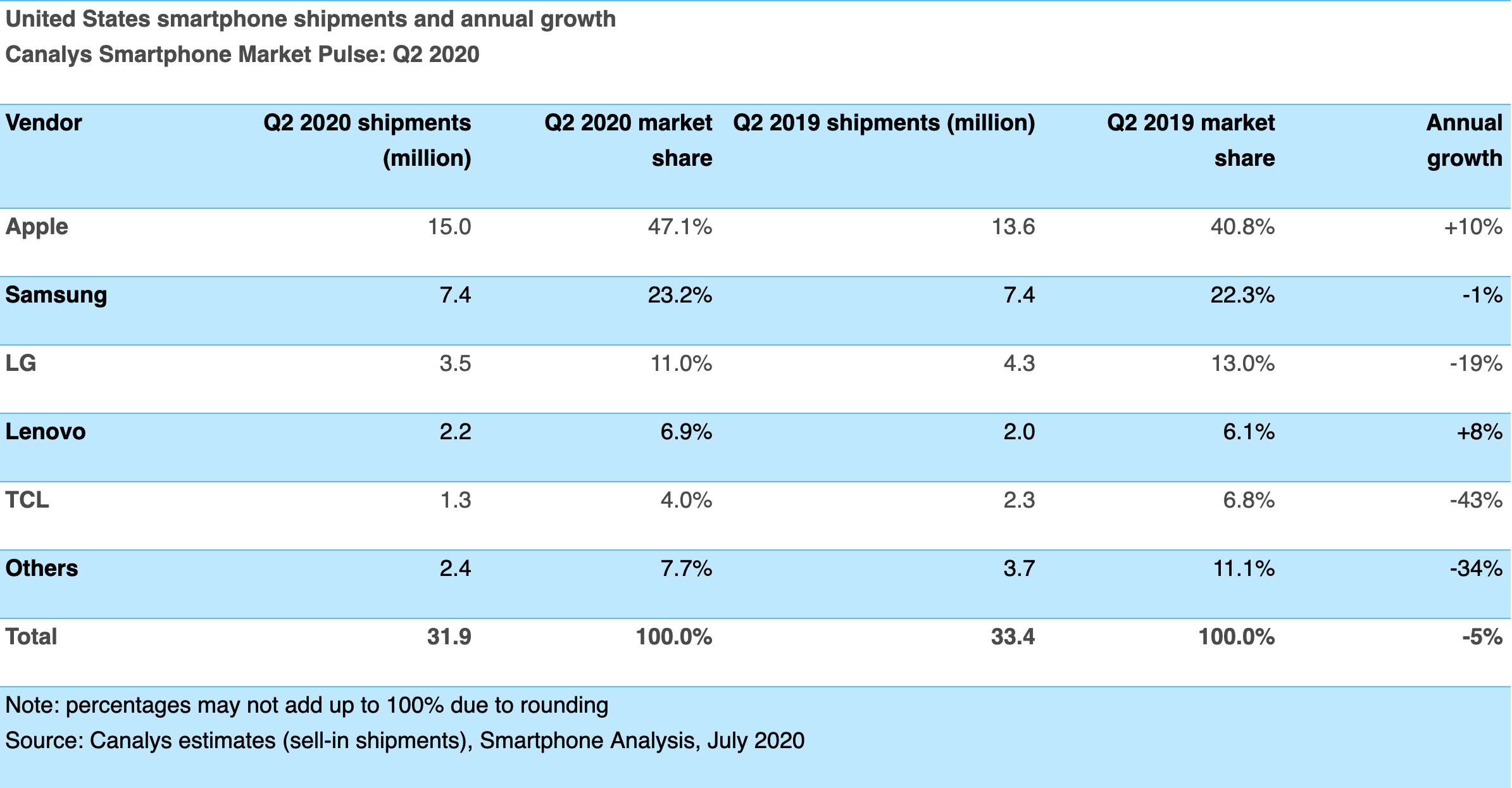
Apple shipped approximately 15 million iPhones in the United States in the second quarter of 2020, according to a new report shared by Canalys, setting a new domestic record.


Apple shipped 15 percent more iPhone 11 devices than last year's equivalent, iPhone XR. Most strikingly, iPhone SE was responsible for growing Apple's quarterly market share to 47 percent. Overall, Apple shipped 10 percent more devices compared to the same quarter of last year.

Vendors shipped 31.9 million smartphones in the United States in total. This represents a 5 percent year-on-year decline, but an 11 percent quarter-on-quarter increase. The reopening of manufacturing facilities in China at the end of March and retail stores reopening in May and June were key contributors to growth. Around 70 percent of smartphones shipped in the U.S. in the second quarter of 2020 were made in China, up 60 percent from the last quarter.


5G adoption was low in the second quarter of 2020, but is expected to increase as more 5G-connected devices come to market in the coming months. Apple is expected to contribute to this drive for 5G adoption with the release of 5G-enabled iPhones this fall.

"As the coronavirus pandemic forced consumers to stay at home, 5G adoption in the U.S. failed to take off. Store closures and virus fears limited interaction with demonstration models, tight consumer budgets further constrained spending power, and with scarce 5G network coverage in American suburbia, consumers saw plenty of reasons to buy a 4G device instead," Canalys Analyst Vincent Thielke said. "Despite the lackluster 5G roll-out so far, strong carrier marketing in coming quarters will be instrumental in catalyzing a multi-year transition period from LTE to 5G."


Canalys also noted the "perpetual state of uncertainty" hanging over smartphone vendors due to an escalation of tensions between the U.S. and China, but explained that this largely does not affect Samsung and LG.

"The worsening relationship has resulted in extreme instability that has global onlookers eagerly awaiting November's presidential election. This may guide the U.S.-China trade war into a new phase of détente – or reignite flare-ups," Thielke explained.


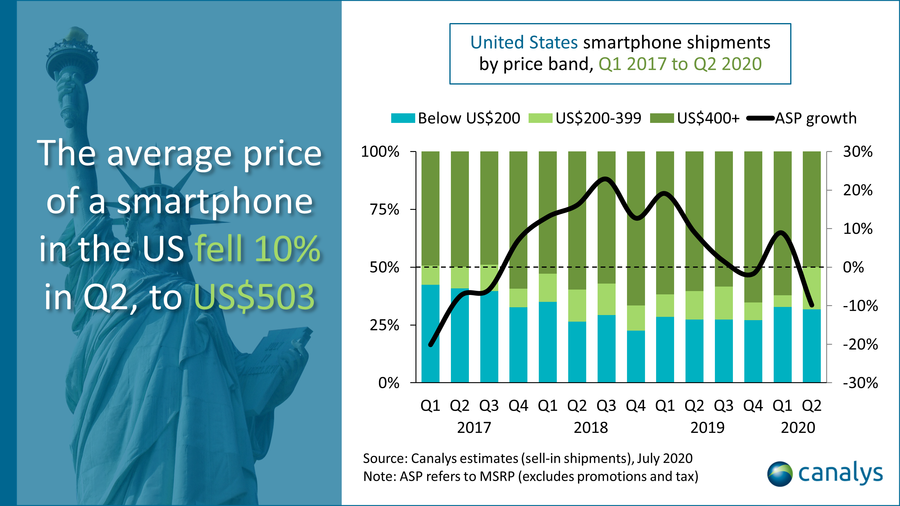
Apple and Samsung together account for seven out of every 10 devices sold. The average price of a smartphone in the U.S. dropped 10 percent compared to last year, down to $503. Canalys found that distributors are increasing orders for ultra-low-end Android smartphones from lesser-known brands, such as Unimax and Wiko. Google and other Android brands are increasing their exposure to the low-end and mid-range segments, and in addition to the success of ‌iPhone SE‌, it appears that the sub-$400 segment is poised to gain more prominence.
Tags: China, 5G, Canalys

This article, "Apple Shipped 15 Million iPhones in the U.S. in Q2 2020, a New Domestic Record" first appeared on MacRumors.com

Discuss this article in our forums


from MacRumors: Mac News and Rumors - All Stories https://ift.tt/3fVag7H


Plastics could help build a sustainable future — yes, you read that right


The disposal of plastics is a global problem. They are nearly indestructible in natural conditions but are discarded worldwide on a large scale. The world produces around 359 million metric tons of plastics each year. Nature cannot address the amount of their disposal at a speed fast enough to prevent harm to living beings. There is a consensus that plastics are an unsustainable material. And yes, plastics are certainly an enormous problem, but they don’t necessarily have to be. The main issue is with our linear economic model: goods are produced, consumed, then disposed of. This model assumes endless economic…

This story continues at The Next Web


from The Next Web https://ift.tt/3aixinS

Satoshi Nakaboto: ‘Coinbase to offer cash loans backed by Bitcoin’


Our robot colleague Satoshi Nakaboto writes about Bitcoin every fucking day. Welcome to another edition of Bitcoin Today, where I, Satoshi Nakaboto, tell you what’s been going on with Bitcoin in the past 24 hours. As Nightingale used to say: To infinity, and beyond! Bitcoin price We closed the day, August 12 2020, at a price of $11,584. That’s a minor 1.58 percent increase in 24 hours, or $180. It was the highest closing price in one day. We’re still 42 percent below Bitcoin‘s all-time high of $20,089 (December 17 2017). Bitcoin market cap Bitcoin‘s market cap ended the day…

This story continues at The Next Web

Or just read more coverage about: Bitcoin


from The Next Web https://ift.tt/2CouFo3

The story of how web browsers changed us forever


This article was originally published by Matthew Guay on Capiche, a secret society for SaaS power users, building a new community of people who care about software to make the SaaS industry more transparent, together. One day, Internet Explorer was nearly the only game in town, powering 96% of website visits at its peak in 2002. Then, quickly it turned into the app you only used to download Firefox or Chrome, or so the joke went. And then Internet Explorer died and turned into Chrome. Empires rise then quickly fall in tech. One year, the web was merely a vision “about…

This story continues at The Next Web


from The Next Web https://ift.tt/3gOkeZM

This smartphone case can crawl up to a wireless charger using tiny robotic legs

  • CaseCrawler is a smartphone case with robotic legs.
  • It’s designed to walk your phone up to a wireless charger.
  • It can carry a phone 13 times its weight.

The one thing I love about robotic vacuum cleaners like the Roomba is that they can crawl to their charging stations when their battery is low. But imagine how cool it would be if your phone could crawl up to a charger on its own. Well, if robotic researchers from Seoul National University (SNU) have their way, this could soon be a reality.

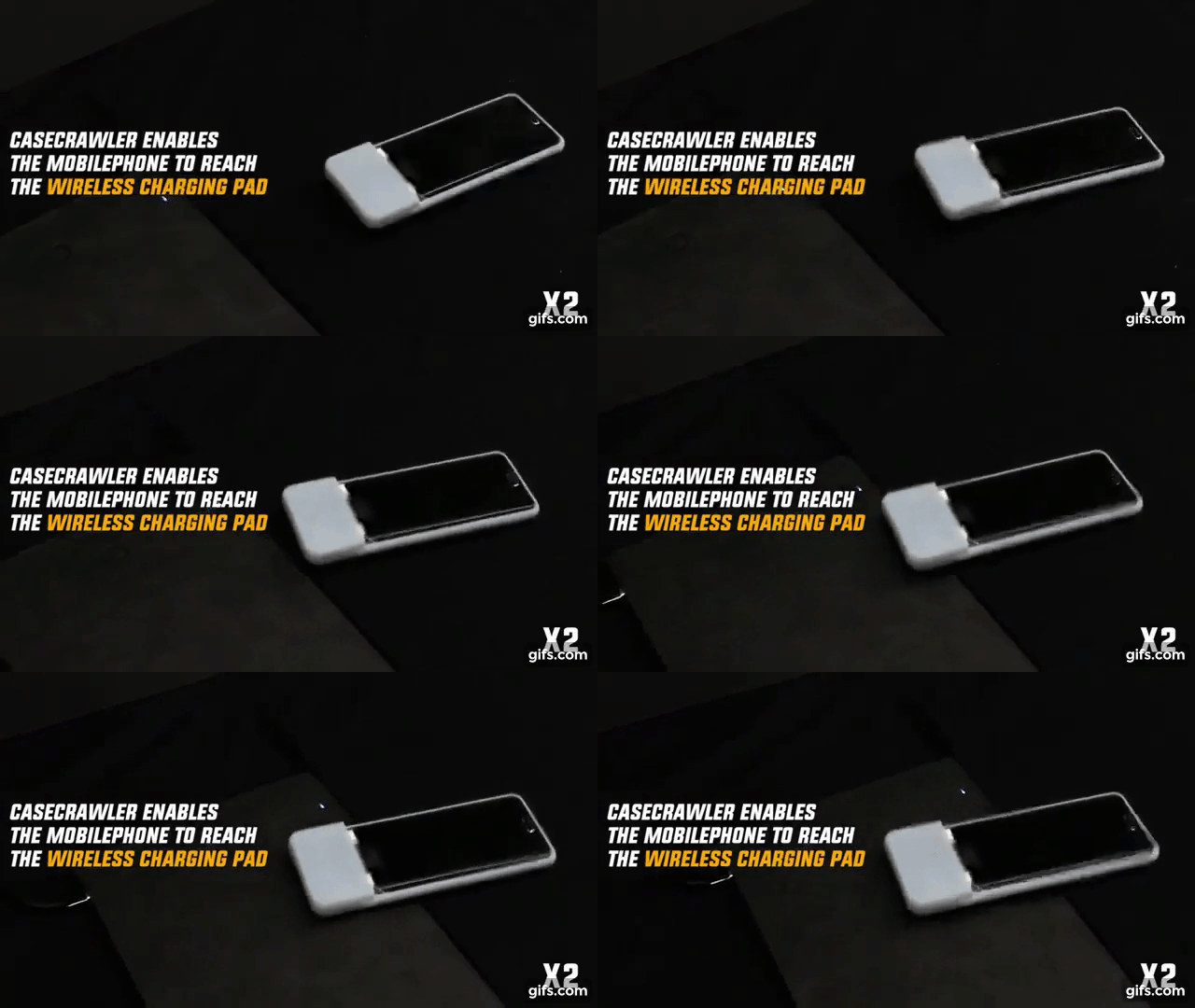
Spotted by folks over at Gizmodo, the CaseCrawler is a robot with the body of a phone case. It can carry your phone to a wireless charger nearby using its tiny robotic legs.

How does CaseCrawler work?

CaseCrawler is designed with a deployable, in-plane transmission that is capable of crawling locomotion. It has leg structures complete with knee joints that can bend only in one direction. These legs can fully retract and become flat once the case is done crawling over. They can also climb over small obstacles, like books, in their path.

Obviously, this is not something that’s under production right now. In its current state, the CaseCrawler is 16mm thick on the end which houses the motor and weighs 22.7g. However, it can carry a load of 300g — 13 times its own weight — which is more than sufficient to take on any smartphone out there.

CaseCrawler

To show the feasibility of CaseCrawler for use in real-world applications, the SNU researchers made it carry a 190g smartphone to a wireless charger. You can see that experiment in action in the video embedded on top.

For now, the CaseCrawler prototype appears to be just a pair of legs without any brains. That is, it cannot intelligently maneuver towards a wireless charger on its own. However, the researchers claim that in the future, if appropriate sensing and control functions are implemented, the robot will be able to collect data or even return to the owner when needed.

So would you buy a crawling smartphone case if it were to become commercial? Or do you just want to throw a book at it? Let us know your thoughts in the comments section below.

Next: These 7 phones are the best Google Pixel 4a alternatives


from Android Authority https://ift.tt/3gSPt5T