Google’s first smartphone line — the Nexus series — definitely wasn’t synonymous with ultra-premium design and features. Google has attempted to change that perception with its current phone family, the Google Pixel series. But that Nexus-to-Pixel name and strategy shift also resulted in another key change — higher prices.
While flawless hardware still isn’t Google’s strong suit, the company’s software innovation has taken the Pixel series from zero to tech-enthusiast hero in just four short years. In 2020, the Pixel price range now spans $349 to $999, which is quite a departure from the early years. More recently, Google’s mid-range “Pixel a” series has put Google hardware on the radar for mass consumers too.
To see how the company’s roadmap has changed since 2016, we’ve compiled price tags and some key product talking points for every Pixel handset so far.
Read more: All Google Pixel phones released so far
Google Pixel price: $649 – $869

At $649, the original Pixel seems quite cheap compared to today’s flagships, but this wasn’t a particularly affordable debut. Samsung launched its Galaxy S7 flagship for $689. Meanwhile, the swanky S7 Edge variant retailed for $769, just a fraction more expensive than the Pixel XL’s $769 debut. The 128GB Pixel XL cost an eyewatering $869, while the ill-fated (see combustible), but far more sophisticated, Galaxy Note 7 cost $850. The Pixel series clearly intended to play with the big kids from day one.
See also: Google Pixel redux review: Proof of the power of software
Google didn’t shy from charging premium prices, even though, frankly, the first-generation Pixel’s hardware was hot garbage. The metal and glossy finish chipped too easily, the phone lacked the increasingly standard IP68 water and dust resistance rating, and the rear camera didn’t even feature OIS. There really wasn’t a lot of hardware on offer for such a high price tag.
Instead, Google Assistant, the Pixel Launcher, and Google’s impressive HDR+ photography software won Google some early fans. To this day, software remains one of the most compelling reasons to purchase a Pixel handset.
Google Pixel 2 price: $649 – $949
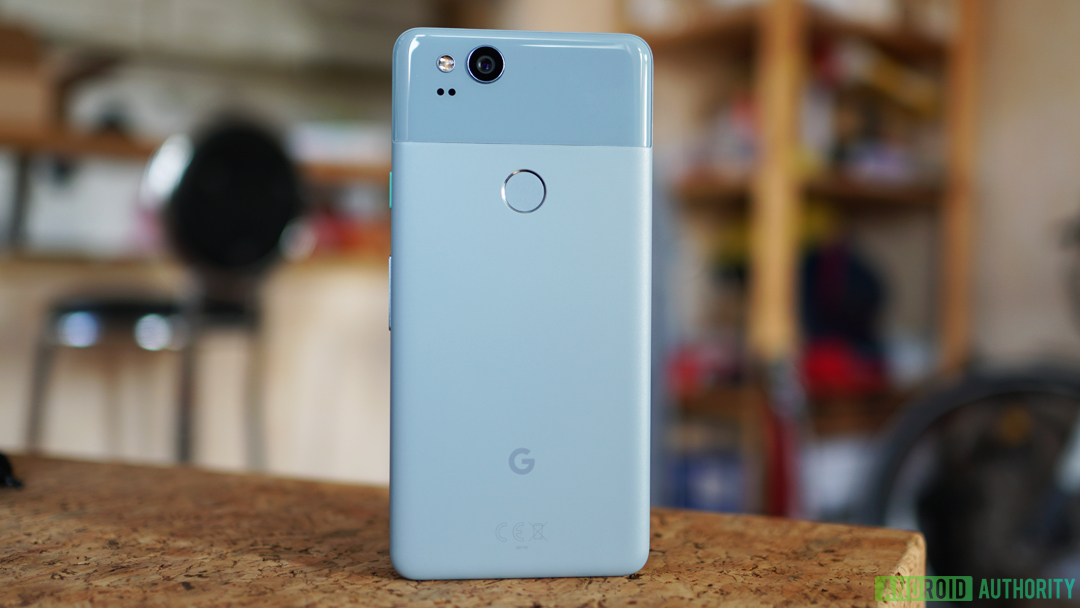
Google sought to keep the entry point to the Pixel series reasonably affordable with the arrival of the Pixel 2, sticking to its $649 base entry point for 64GB storage and $749 for the 128GB version. However, Google saw room for a price hike with the Pixel 2 XL. Its base cost leapt to $849 and $949 for the 128GB variant, a full $80 more than its first-generation equivalent.
See also: Google Pixel 4a vs older Google phones: Should you upgrade?
$80 is hardly the largest price hike in history, but that put the Pixel 2 XL directly up against the $850 Samsung Galaxy S8 Plus. Perhaps not the best move for a phone that would prove to have some battery life and display issues, while also daring to ditch the headphone jack ahead of the curve. Google made strides with in-house hardware though, introducing the Pixel Visual Core to enhance the phone’s AI and image processing capabilities, giving rise to one of the best cameras phones on the market.
Even with the considerably high cost in mind, Google did enough to refine its original vision and just about justify the higher price. As we said at the time, you don’t buy a Pixel just for the hardware. Instead, the Pixel 2 series was carried by its stellar software, three years of OS updates, and a best-in-class camera system.
Google Pixel 3 price: $799 – $999

After leading the way with 2017’s Pixel 2 XL, it was only a matter of time until the smaller entry in the series saw its price go up too. That happened a year later with the $799 Google Pixel 3. That’s a full $150 more than the most basic original Pixel and Pixel 2.
See also: Google Pixel 3 XL redux: It hasn’t aged well
At the same time, the Pixel 3 XL saw its price rise by $50 compared to its predecessor. This put the 128GB storage option right on the $999 mark. Pretty pricey for a phone sporting just 4GB of RAM and a single rear camera. This was the year that Apple and Samsung normalized the idea of $1,000+ smartphones, which caused plenty of backlash at the time. Perhaps Google felt justified just keeping pace with the big players.
The Pixel 3's $150 price hike is Google's most controversial (so far).
Google did make efforts to justify its higher price with more competitive hardware this time around though. An IP68 water and dust resistance rating, cracking P-OLED display, wide-angle selfie camera, wireless charging, and a revamped premium look launched the Pixel series from a flawed but plucky underdog into a mainstream worthy smartphone. Just don’t mention the unsightly “bathtub” notch on the Pixel 3 XL or the dubious battery life.
Google Pixel 3a price: $399

2019’s Pixel 3a marked a major shift in Google’s smartphone strategy. With an affordable $399 price tag ($479 for the 3a XL), the Pixel 3a halved the cost of entry into Google’s ecosystem.
Google’s less than perfect hardware was easier to overlook at this price point. Plastic bodies, thicker bezels, and slower memory were all perfectly acceptable trade-offs. Especially as the Pixel 3a packed in many of Google’s previously high-end software features, including its industry-leading camera capabilities. Better still, the lower end specs helped ensure Google’s more affordable phones could easily last a full day of use.
Overall, the Pixel 3a XL may have been a tad on the expensive side, especially in markets with plenty of affordable alternatives. But the smaller and cheaper Pixel 3a was a really competitive package, priced just right for Western audiences.
Google Pixel 4 price: $799 – $999

After testing its fans with the Pixel 3 series, there was a collective sigh of relief when Google held off on any further price increases with the Pixel 4 and 4 XL. Both models and storage variants cost exactly the same as the previous generation. In a year of $1,000 smartphones, the Pixel 4’s stagnant price strategy defied the broader industry.
At the same time, the Pixel 4 and 4 XL packed in more hardware than ever before. The phones featured dual-rear cameras and a wide-angle rear lens for the first time. Display quality led the field and Google was quick onto the 90Hz display trend. The Pixel 4 series also introduced Google’s Motion Sense and Soli radar system. While perhaps not worth the hit to already weak battery life, Motion Sense showcased Google’s continued efforts to marry unique hardware with improved software experiences.
See also: Google Pixel 4 vs Pixel 4a – Which should you buy?
But Google’s willingness to experiment continued to be its greatest strength and weakness. While the Pixel 4 offered some of the best camera and software features around, its other features couldn’t quite shake that lack of polish that plagued early Pixels. Until that’s addressed, a flagship Pixel above $1,000 would be a tough sell.
Google Pixel 4a price: $349

This brings us to Google’s latest offering — the Pixel 4a. Priced at $50 less than the Pixel 3a, this is the first time Google has actually lowered the asking price for a new generation. And talk about a bargain.
Better processing hardware does away with the 3a’s occasional jitters, the camera is sublime, and there’s Google’s top-class software, of course. All that for a third of the cost of some flagships. As we said in our review, it represents the best Google experience for way less cash.
However, the Pixel 4a has even more competition this year. The Apple iPhone SE, the OnePlus Nord (outside the US), and the Samsung Galaxy A51 are all fighting it out at similar price points. Not forgetting a slew of other affordable phones from brands like Xiaomi and Realme in Europe and Asia. But the Pixel 4a’s slight price cut gives it an edge in this increasingly busy market segment.
There’s no XL model this generation, but the Google Pixel 4a 5G is on the way. However, this phone will retail for $499, making it $20 more than last year’s 3a XL and more expensive than the 5G-enabled OnePlus Nord. $20 is not a huge mark-up for 5G, but it definitely puts the phone in a different market segment to the 4a. The $150 price gap with the Pixel 4a is Google’s biggest yet. We’ll have to see if the Pixel 4a 5G’s hardware does enough to convince consumers of its value proposition.
Read more: Google Pixel 4a 5G: Everything we know so far
Google Pixel price history: The big picture
At the time of writing, the cheapest entry point into Google’s Pixel flagship range costs $150 more than it did when the range launched four years ago. That’s a pretty steep markup over just four generations, but actually quite typical for the mobile industry. Google’s phones have never been cheap, but a price freeze after the Pixel 3’s jump has helped them remain competitive as flagship rivals Apple and Samsung pushed for four-figure sums.
Even the highest spec entries in the Pixel series haven’t dared yet venture north of the $1,000 mark. However, after the Pixel 4’s price freeze, there’s the ominous feeling that future Pixels could cost more still, especially as we enter the era of 5G.
While the Pixel flagship range has become increasingly expensive, Google’s affordable series has gone in the other direction. The Pixel 4a is a crisp $50 cheaper than the Pixel 3a and comes with some much-improved hardware and Google’s blend of software excellence. The upcoming Pixel 4a 5G is set to retail at $499, making it Google’s most expensive mid-range phone yet. But that’s to be expected with the move 5G and further hardware upgrades.
Google’s product portfolio has (so far) attempted to please everyone. Expensive flagships for the enthusiasts and affordable versions for the more budget-conscious. Google doesn’t like to talk sales, but the “Pixel a” range looks to be the more commercially successful of the two approaches. With that in mind, it’s not surprising that the Pixel 4a is even more aggressive on the price.
This brings us to the Google Pixel 5. All of the Pixel 5 rumors so far have suggested it will be powered by a more affordable mid-tier chipset from the Snapdragon 700 series. That could help keep the Pixel 5’s price down. We’ll just have to see if Google views the future of its flagship Pixels as ultra-premium and expensive, or more mass-consumer and affordable.
What do you think about Google Pixel pricing and its two-tier approach to devices over the past four years?
 Loading poll
from Android Authority https://ift.tt/3iMMFI9