Monday, 5 October 2020

LG PH parades new normal-ready devices including gaming monitors, TVs, and speakers

LG Philippines today shared its newest line of normal-ready devices such as like UltraGear gaming monitors, UltraWide monitor, OLED TVs, NanoCell Real 8K TVs, and XBOOM speakers for home entertainment, play, and even work.
LG PH parades new normal-ready devices including gaming monitors, TVs, and speakers
LG OLED GX TV with LA Tenorio

New normal-ready LG devices PH!

On top of LG's home entertainment products was the LG OLED GX TV with Alpha 9 Gen 3 processor. This TV uses self-lit pixels that work independently emitting their own light. The company boasts that it has "perfect" blacks, "outstanding" colors, "infinite" contrast, and "sharpest" details. It's a TV that should be great for Cinematic, Sports, Gaming, and Lifestyle entertainment.

LG also boasts the NanoCell Real 8K TV with "accurate and lifelike" color reproduction by applying about 1nm-sized nanoparticles to filter out dull colors and enhance color purity for more vivid and accurate hues.
PL7 and PL5
PL7 and PL5

The company also shared two new speakers to complement the new LG TVs–the XBOOM Go PL5 and PL7 in collaboration with British Hi-Res audio maker Meridian audio. These are portable Bluetooth speakers designed to give small or even big rooms an immersive sound experience.
For gaming with Megan Young

For gamers, streamers, and multitaskers, LG showcased the UltraGear and UltraWide gaming monitors.  UltraGear is a 24-inch display with 144Hz response rate, 1ms response time, FHD+ resolution, and RADEON FreeSync. LG UltraWide is a 34-inch curved ultra-wide monitor with a resolution of 3440 x 1440, HDR10, Thunderbolt 3, and MAXX AUDIO stereo speakers.
Actor Mikael Daez with the gaming monitors

To further highlight the features of the new LG devices, LG collaborated with influencers and tastemakers to discuss how LG's new devices are great upgrades as you stay at home.

Multi-talented actor Mikael Daez delved into how LG UltraGear gaming monitors leveled up his gameplay and how the UltraWide monitor helped in working-from-home, while acclaimed film director Mik Red gushed about the unrivaled cinematic experience offered by LG OLED TV. PBA all-star LA Tenorio shared his observations on how self-lit pixels excel in sports, and beauty queen Megan Young admired the fast response time the OLED TV offers. Tatler Homes Editor, Stephanie Zubiri discussed how LG OLED fits perfectly inside a smart home thanks to its AI technology, while long-time LG brand ambassador James Deakin went into detail about pure colors of LG Real 8K NanoCell TVs.

LG Managing Director Inkwun Heo spoke about the role that home entertainment plays in the new normal.

With the extended amount of time we’re now spending at home and in the foreseeable future, we really get to see Life in Details. We learn to appreciate how technology makes our life better. As staying at home becomes the "new normal", I assure you, with our new Home Entertainment System, you would want to stay at home.

For the price and availability, visit LG at LazMall, authorized online sellers, and dealers nationwide. Visit this link for the complete list of retailers.


from GIZGUIDE | Your Gadget Coach https://ift.tt/3lbQ0li

A closer look at Volkswagen’s all-electric SUV, the ID.4


This article was originally published by Steve Schaefer on Clean Fleet Report, a publication that gives its readers the information they need to move to cars and trucks with best fuel economy, including electric cars, fuel cells, plug-in hybrids, hybrids and advanced diesel and gasoline engines. The all-new 2021 Volkswagen ID.4 is the car VW is counting on to build its post-diesel-scandal electric car business in the United States. Based on a first look—but sadly, not a drive—I’d say they have reason for optimism. The hottest segment in the American vehicle market today is compact crossovers–think Toyota RAV4 and Honda CR-V.…

This story continues at The Next Web


from The Next Web https://ift.tt/33vWvth

We asked, you told us: You clearly prefer 60Hz OLED over high refresh rate LCD

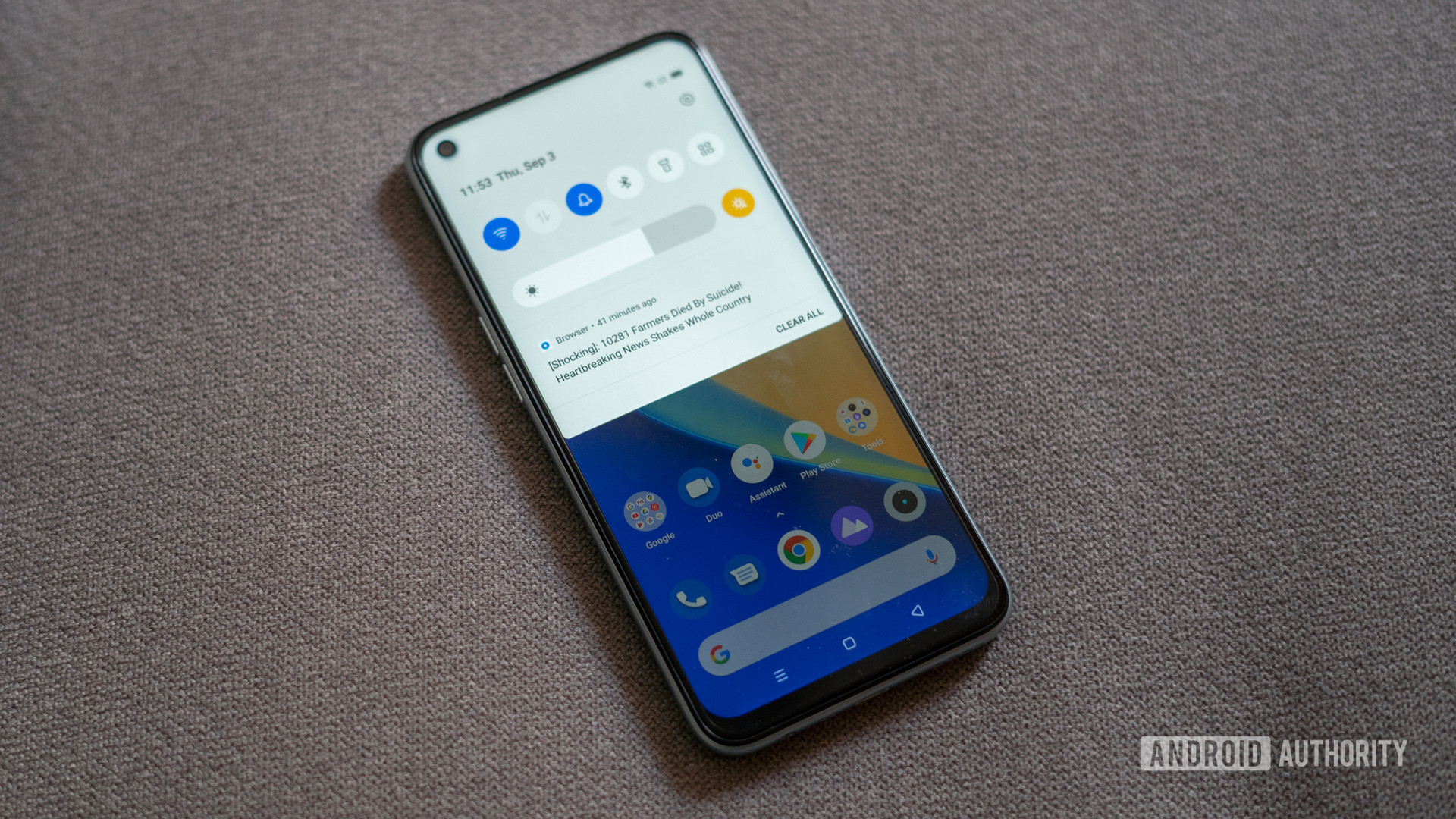
Realme 7 with Realme UI and notifications

Credit: Dhruv Bhutani / Android Authority

OLED vs LCD has been a battle for years now, with both screen technologies possessing their strengths and weaknesses. However, OLED has become the go-to screen tech for flagship phones and some mid-range phones, while LCD screens are usually found on budget and mid-tier phones.

We’ve also seen high refresh rate screens in the last few years, offering smoother animations and performance in system menus, supported games, and more. So that got us wondering whether people would choose an OLED screen at a standard refresh rate (60Hz) or a high refresh rate LCD screen.

Do you prefer 60Hz OLED or high refresh rate LCD?

Results

A total of 3,633 votes were cast on our website as of writing, with 72.5% giving the nod to 60Hz OLED screens compared to 27.5% who chose high refresh rate LCD screens.

We saw a very similar breakdown when we posted this poll on Twitter. A total of 5,062 votes were cast on Twitter, with 72.9% choosing 60Hz OLED panels and 27.1% picking high refresh rate LCD tech.

In other words, the winner by a landslide is clearly 60Hz OLED, with readers feeling that the benefit of a high refresh rate doesn’t outweigh the benefit of a standard OLED panel. This poll is particularly pertinent in recent months, as we’ve seen the Realme 7 offer a high refresh rate LCD while the Realme 7 Pro delivers a 60Hz OLED panel. We’ve also seen Xiaomi recently launch the Mi 10T series, packing high refresh rate LCD panels.

You can read more about the differences between OLED and LCD at the previous link. Nevertheless, OLED screens generally offer better power consumption, deeper blacks, and can get very bright. Meanwhile, LCD panels are cheaper to produce and aren’t prone to burn-in as we see over time with some OLED panels.

Your comments

  • Shizuma: While I do in general prefer high refresh rates on computers for gaming I don’t see a ton of benefit on phones since I don’t game on my phone as honestly mobile games are terrible compared to console/PC games and high refresh rate kills battery life, so in that case I would prefer OLED for a phone over high refresh rate, especially for the ability to have always on displays.
  • 2much2soon: I put a note 9 vs note20ultra to the test at school and separately using it no one noticed a difference between 60hz and 120hz… Zero and that was close to 20 people. Putting them side by side 4 people out of 10 thought there was something different (only when scrolling down long websites), 2 of this 4 thought it was due to a faster “cpu” . Didn’t play games or movies.. Just android and apps.
  • Zero: 90Hz is cool and all but it’s the AMOLED display that suits me with dark mode being very suitable with AMOLEDs
  • EspHack: the thing is, OLED is inherently “smoother” looking than LCD, just for reference, my 60hz OLED looks about as smooth as my 90hz surface go, LCD is just riddled with artifacts and issues not present on OLED, the only downside to OLED is potential burn in and often lower brightness. So yeah, higher refresh rate LCD is in a lot of ways just compensating for its deficiencies compared to lower refresh OLED, a hard choice even then because going back down in hz is annoying but going back to grey blacks and spotlight halos and blur and worse than perfect response times and a million other visual annoyances is just too much for me
  • Stefan M.: High Refresh is interesting only for a few hours once you get it for a first time, after that you switch it back to 60 to save battery. Also, 90% of the content is (at the best) in 60 fps so you really no need more than 60 hz panel. OLED is great 100% of the time and saves battery. No room for discussion here :)
  • Leander Berg: I’d go with 30 fps lcd if the phone was at a decent price with long term support. Honestly everyone falls for the stupid tactics of companies.
    The cheapest iphone will have years of software support that not even Android phone 3x the price can match. Why are we talking about what the brands want us to take about, instead of discussing the far greater issue with today’s devices? I’m just tried of this spec talk when all we need is easy serviceability and long term support.
  • InfDaMarvel: I’ll never go back to LCD. Even the best LCD screens don’t not compare to OLED.

Thanks for voting in this poll and for leaving all those comments! We really appreciate it. What do you make of this question and the results? Let us know below!


from Android Authority https://ift.tt/3iyejIe

Motorola Razr 5G: Everything you need to know about Moto’s new foldable phone

Blush Gold Combo

Credit: Motorola

Motorola‘s second-generation foldable is here — the Motorola Razr 2 or, as it’s being officially named, the Motorola Razr 5G.

The phone is a follow up to the Motorola Razr, which reached the market earlier this year. It features a refined design, expanded functionality, and 5G to set it apart from the first-gen product.

Available this Fall at a price of $1,399, do these changes go far enough to make the Razr 5G worth lots of your hard-earned dollars?

We have all the basics covered in this Android Authority buyer’s guide to help you on your decision-making journey.

Motorola Razr 5G: What is it?

Polished Graphite renders

Credit: Motorola

The Motorola Razr 5G is a new foldable, though technically it’s a sequel to a sequel. It doesn’t stray far from the idea behind the original, which was to merge nostalgia for the flip phones of old with the folding display technology of 2020. The phone is a compact device when folded and a normal-sized smartphone when opened. It has at least one direct competitor in the Samsung Galaxy Z Flip, and tertiary competitors in other folding phones, such as the Samsung Galaxy Z Fold 2 and, to a certain degree, the LG V60 and LG Velvet.

Motorola’s goal with this phone was to create a desirable, premium device that appeals to those who hold a fondness in their hearts for the personality of phones from ages past. But Motorola is also trying something new here. The folding form is in its infancy and none of the products in the market have truly found their footing.

So what is the Motorola Razr 5G? It’s a refined experiment, a second take, a chance to get things (more) right while serving as the shiny hero of Motorola’s lineup.

Who is it for?

Liquid Mercury Front Closed

Credit: Motorola

The Razr 5G is as much a phone of the future as it is of the past. While it steals its basic approach from the famous 2005 smash hit, it showcases some of the latest innovations from Motorola and beyond. Despite having been in the market a full year now, folding screens are still fresh tech. They have yet to scale down from pricey showpieces to more mainstream, affordable fare.

The Motorola Razr 5G is for people who are bored with current phone designs, who long for something different and new, who want something to show off to their friends in order to stir discussion. At $1,400, it’s a high-end purchase that’s out of reach for most people. That makes the Razr 5G a luxury item.

It’s also for people willing to take chances. The first Razr was widely panned for its creaky hinge. Motorola says the hinge of its new phone has been completely redesigned and is stronger than ever. As always, that will need to bear out in the real world before we believe what Motorola is pitching. Moreover, folding display tech has yet to prove itself of real value to consumers. This could be a fad that fades into oblivion — or it could be the next big thing. We just don’t know yet.

Whatever your reasons for ditching the standard slab, the Motorola 5G is first and foremost for those who can afford it.

What are the Razr 5G’s features?

Liquid Mercury Front Opened

Credit: Motorola

The Motorola Razr 5G sports a folding design with two displays: a 2.7-inch outer “quick view” display and the main inner screen. Motorola is one of the only phone makers to bestow such a powerful external display on its foldable. The Microsoft Surface Duo and Samsung Galaxy Z Flip, for example, have no such screen. On the Razr 5G, the external screen allows you to access small snippets of apps such as your messages, music player, and Google Maps. Up to eight apps can be pinned to the quick view screen for easy access. The 6.2-inch inner screen is a more traditional Full HD+ affair, but it’s decidedly low on pixels at less than Full HD.

A chin sets the design apart. Motorola says it tapered the chin on this second-generation product to make it easier to grip and interact with when it comes time to balance the phone. (The company moved the fingerprint reader from the chin to the rear of the phone, which makes it easier to reach and interact with.) The chin holds the phone’s four 5G antennae. Speaking of 5G, the phone adds support for sub-6GHz 5G, which means it is compatible with the current 5G networks of AT&T and T-Mobile.

Motorola is excited about the 48MP camera, which can be used as the main camera or a high-end selfie shooter. There’s also a dedicated selfie camera for when you’re holding the phone normally. The Razr 5G can record video at a maximum 4K at 60fps.

In order to keep costs down, Motorola opted for a Qualcomm Snapdragon 765G chipset. This is not the 865 premium chip that powers most other modern flagships. Instead, it’s a more affordable option that Motorola says still delivers plenty of performance across the board. Some potential owners may be disappointed by this spec, but keep in mind there’s balance in everything. Rounding out the chipset, you’ve got an Adreno 620 GPU, 8GB of RAM, and 256GB of storage.

Last there’s the battery. The phone has a meager 2,800mAh power cell inside. That’s not a lot by modern standards. Most flagships have battery in the 4,000-5,000mAh range. Hopefully the more frugal 765G combined with the Full HD+ resolution will keep power demands to a minimum.

Motorola Razr 5G specs

  Motorola Razr 5G
Display Main: 6.2-inch P-OLED, Full HD+
External: 2.7-inch G-OLED
Processor Qualcomm Snapdragon 765G
Adreno 620 GPU
RAM 8GB
Storage 256GB
Battery 2,800mAh
15W TurboPower charging
Camera Rear:
48MP Quad Pixel for 12MP output, f/1.7 aperture, 1.6μm pixel size, OIS

Front:
20MP Quad Pixel, f/2.2 aperture, 1.6μm pixel size

Video:
UHD (30fps) @ 16:9 or 21:9
FHD (60/30fps) @ 16:9 or 21:9
Slow motion FHD (120fps)
Slow motion HD (240fps)
Connectivity 5G: NR Sub-6GHz
4G: LTE (DL Cat 18)
3G: UMTS / HSPA+
2G: GSM / EDGE
Bluetooth 5
Wi-Fi 6
GPS, A-GPS, GLONASS, Galileo
Dimensions and weight Unfolded: 72.6 x 169.2 x 7.9mm
Folded: 72.6 x 91.7 x 16mm

192g
Colors Polished Graphite, Liquid Mercury, Blush Gold

Competition and alternatives

Blush Gold Camera Detail Closed

Credit: Motorola

The Samsung Galaxy Z Flip 5G is the most direct competitor to the Motorola Razr 5G. Samsung’s Flip first reached the market in February. Similar to the Razr, it’s a modern-day slab that bends in half at the waist to reduce its size to something more pocketable. The Z Flip is available in standard and 5G variants; the 5G version is the newer and more widely available of the two. The Razr’s biggest advantage over the high-quality Z Flip is the outer display. The Z Flip is limited to a tiny window that’s not good for much more than checking the time and incoming notifications.

The Z Fold 2 is a separate type of folding device in that it starts out the size of a normal phone and expands into a tablet when opened. LG’s Dual Screen-capable V60 and Velvet don’t have bending screens, per se, but do offer a two-screen experience with the accessory screens. LG’s devices are the most affordable of the bunch.

Where to buy the Motorola Razr 5G

Packaging

Credit: Motorola

Motorola will offer the Motorola Razr 5G unlocked in North America via Motorola.com and the rest of the world later this fall priced at $1,399. Motorola says other retailers will eventually sell the device, including Amazon, Best Buy, and B&H. It will also be sold at AT&T and T-Mobile stores.

In the UK, the Motorola Razr 5G will be sold via Amazon, Carphone Warehouse, and John Lewis for £1,399. It will also be available through carriers O2 and Vodafone.

In India, the phone is available for pre-order over at Flipkart. The phone is priced at Rs. 1,24,999 (~$1700) and goes on sale starting October 12.Stay tuned to Android Authority for details on preorders!

Top Motorola Razr 5G questions and answers

Q: Does the Motorola Razr 5G support 5G?
A: It’s in the name! But not all 5G is equal. The Razr 5G supports sub-6GHz 5G, which means it will work with the mid-band networks from AT&T and T-Mobile at launch.

Q: Does the Motorola Razr 5G have a headphone jack?
A: No, there is no headphone jack on the Razr 5G. You will need to use Bluetooth headphones or USB-C wired headphones with the phone. The good news is that a USB-C-to-3.5mm adapter is included in the box.

Q: Does the Motorola Razr 5G support wireless charging?
A: No, it doesn’t. It charges at a speed of 15W via USB-C cable and the in-box power supply.

Q: Does the Motorola Razr 5G have dual-SIM capabilities?
A: Technically, yes. The unlocked variant of the Razr 5G supports both a physical nano-SIM and an eSIM. It does not support two physical SIM cards.

Q: Does the Motorola Razr 5G have a microSD card slot?
A: No, the phone does not support expandable storage.

Q: What storage variants is the phone available in?
A: The phone comes in just a single 8GB/256GB variant.

Q: Does the device have stereo speakers?
A: No, the Motorola Razr 5G has a single bottom-firing speaker.

Q: What colors will the Motorola Razr 5G be available in?
A: The phone will come in three colors: Polished Graphite, Liquid Mercury, Blush Gold. There’s no word if any of those colors will be exclusive to certain regions or markets.

Q: Will there be protective cases for the Motorola Razr 5G?
A: We can only assume that third-party case makers will deliver for the phone. Nothing ships in the box.

Q: What’s in the box with the Motorola Razr 5G?
A: You’ll find the Motorola Razr 5G, an 15W power supply, a USB-C cable, a SIM tool, a headphone adapter, and the usual paperwork.


That’s everything you need to know about the Motorola Razr 5G. We’ll keep this post updated with any new info as soon as we have it. In the meantime, what do you make of the “Razr 2”? Vote in the poll below and let us know in the comments.

Please wait.. Loading poll


from Android Authority https://ift.tt/2LMsgVf

Mi Smart Speaker review: The best affordable smart speaker

The smart speaker market is for the most part dominated by Google and Amazon’s offerings. Sure, there are great alternatives for Google Assistant and Echo speakers, but these tend to be more premium options that focus on better audio features. The Xiaomi Mi Smart Speaker, however, is intended as an affordable entry into a smart ecosystem. As such, it is designed for price-conscious markets like India.

Does the speaker succeed at distilling the Google Home experience to a price point that is half of the equivalent alternatives? We find out in the Android Authority review of the Mi Smart Speaker.

Mi Smart Speaker Mi Smart Speaker
The Mi Smart Speaker delivers the same audio capabilities as speakers that are twice as expensive, excellent build quality and Google Assistant capabilities at a price that is all about value.

Mi Smart Speaker review: The big picture

Xiaomi’s entire ecosystem has been built around the premise of value. From smartphones to smart home equipment, the idea is to offer options that belie the price, bringing most of the features from higher-end equipment at hyper-competitive prices.

Of course, there are some compromises along the way, but often enough, they are small enough to overlook. The Mi Smart Speaker is the company’s first foray into smart assistant enabled speakers in India.

Xiaomi previously dabbled in Bluetooth speakers to reasonable success. However, the category is led by giants like Google and Amazon, so Xiaomi will have to offer significant advantages over the first party alternatives to be able to leave a mark.

Is the design any good?

Mi Smart speaker top down

Credit: Dhruv Bhutani / Android Authority

The Mi Smart Speaker cribs a lot of its design sensibilities from the Sonos One. Nevertheless, the Sonos is a much more premium device and Xiaomi has made some compromises to hit the price point.

The Mi Smart Speaker channels the Sonos aesthetic for a classic, minimalist design.

The aluminum build is sturdy, with a perforated grille running around the speaker for audio output. There is, however, just a smidgen of flex when holding up the speaker. This shouldn’t be an issue for most users since you will rarely, if ever, move the speaker around.

Mi Smart Speaker controls

Credit: Dhruv Bhutani / Android Authority

Elsewhere, the plastics on the top and bottom of the speaker are well built but don’t exactly scream luxury. The touch controls for volume control, microphone mute, and play, pause are responsive. Additionally, an LED ring runs around the top of the speaker to indicate that the speaker is listening to voice commands.

Mi Smart Speaker charging port

Credit: Dhruv Bhutani / Android Authority

At the front is a fairly discrete Mi logo, while at the back, you can spot a barrel connector for power. While a USB port would have been a convenient addition, this is a set-and-forget device and it isn’t really a big loss.

Finally, weighing in at just under 1kg, the Mi Smart Speaker stays planted on a surface, while the rubber feet further help dampen any vibrations. Overall, there’s little to complain about the build quality here.

I wouldn’t mind the use of more premium plastics, but for the price, the quality here is more than satisfactory.

How does the Mi Smart Speaker sound?

Mi Smart Speaker next to records

Credit: Dhruv Bhutani / Android Authority

The Mi Smart Speaker is using a single 2.5-inch driver that delivers 12W of audio output. For comparison, the Google Home has a single 2-inch driver, while the Amazon Echo has a larger 3-inch driver.

When it comes to audio quality, I’m more than satisfied. The speaker has been tuned for boosted mids which ensures that vocals and acoustic tracks sound exceptionally clear.

The high treble frequencies are very well controlled and at no point does the speaker sound too shrill. Meanwhile, the bass isn’t too bad for the size, but you will want to temper your expectations.

The room-filling output excels at vocals and acoustic music, though bass can be a bit muffled at higher volumes.

The Mi Smart Speaker isn’t going to get the party started, but there is enough low-end here to please most listeners unless you listen to a lot of bass-heavy music at high volumes.

Overall, Xiaomi’s smart speaker sounds more than satisfactory. In fact, I’d say it sounds even better than the Google Home with its focus on clean mids and a fairly uncluttered sound. That said, the upgraded Nest Audio should be an interesting upgrade option if you’ve got the budget to spare.

Finally, it is possible to create a stereo pair with two Mi Smart Speakers which should let you get dedicated left and right audio channels. Interestingly enough, two of these speakers in a stereo configuration should still be more affordable than a single Nest Audio speaker. Something to consider if you’re in the market for a budget-friendly audio solution.

Does Google Assistant work well on the Mi Smart Speaker?

Mi Smart Speaker next to Google Home

Credit: Dhruv Bhutani / Android Authority

The speaker has two far-field microphones at the top. They do an excellent job of picking up commands from across the room.

The Mi Smart Speaker seamlessly integrates into your smart home setup and has the same Google Assistant as on Google’s own Nest speakers. This means that it supports the entire gamut of Google Assistant queries that you are used to on your phone.

Additionally, the speaker can become the center of your smart home ecosystem and allow you to control smart lights and other equipment. In fact, almost all the ecosystem products sold by Xiaomi in India are Google Assistant-enabled. The launch of the Mi Smart Speaker means that you no longer have to look outside the ecosystem to get started with your smart home setup. Very smart.

Should you buy the Mi Smart Speaker?

Mi Smart Speaker Mi Smart Speaker
The Mi Smart Speaker delivers the same audio capabilities as speakers that are twice as expensive, excellent build quality and Google Assistant capabilities at a price that is all about value.

The Mi Smart Speaker is a perfect example of everything Xiaomi stands for. The speaker isn’t going to blow your mind, but it outputs quality audio that should be more than satisfactory for most users.

The speaker is priced to move, and the build quality surpasses that of most other smart speakers at the price.

Additionally, the Mi Smart Speaker can be much louder than the Nest Mini and Echo Dot. The only real advantage that the Echo Dot has is the ability to use line-out to connect to larger speakers. However, I don’t suspect that will be a major use case if you are looking at buying a smart speaker.

Available at a promotional price of Rs. 3,499 at launch, the Mi Smart Speaker is a no brainer. Unless you have a specific reason to invest in the Amazon Alexa ecosystem, the Mi Smart Speaker has all the smarts you need and delivers nearly the same audio quality as products that cost twice as much.


from Android Authority https://ift.tt/34ouTFz